








Drought forces Swiss cows to descend early from Alpine pastures
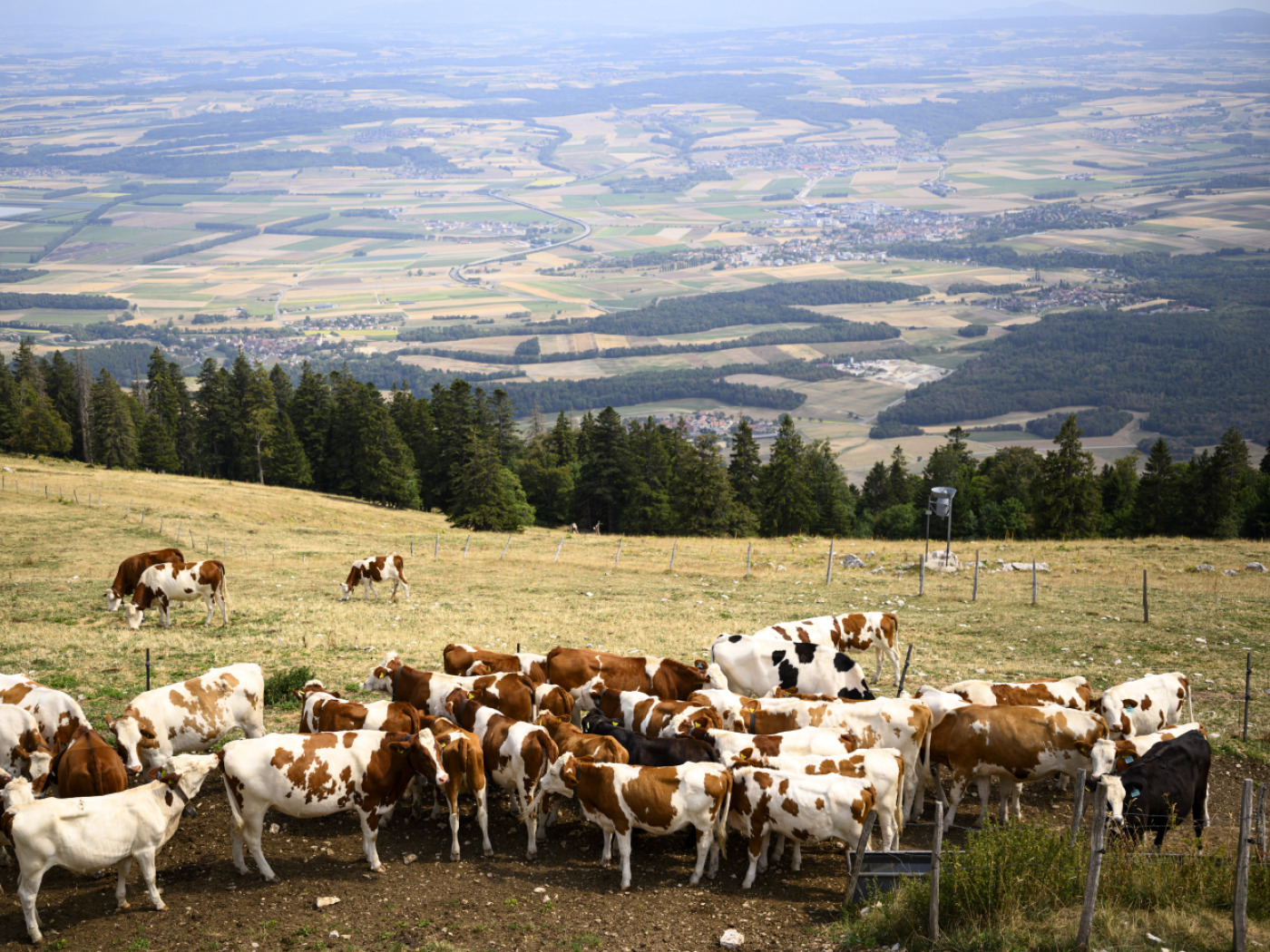
Some Swiss farmers have already brought their livestock down from the mountain pastures earlier than planned due to drought conditions.
Select your language
Generated with artificial intelligence.
Listening:
Drought forces Swiss cows to descend early from Alpine pastures
The Jura Arc, French-speaking Switzerland and parts of eastern Switzerland have been particularly hard hit, said Selina Droz, director-general of the Swiss Alpine Economy Federation (FSEA). The situation is critical across the whole country.
+ Why Swiss cows climb mountains
The FSEA does not have precise figures on the number of farms that have had to bring forward the descent from the mountain pastures. According to Droz, the vast majority of the mountain pastures affected have, however, brought only some of their animals back down to the valley, in order to conserve drinking water and fodder there too.
This year’s “highly exceptional situation” is also taking its toll on lowland farms, whose fodder reserves are equally limited due to the drought. The only alternative is the early slaughter of livestock, a measure to which some have already resorted.
External Content
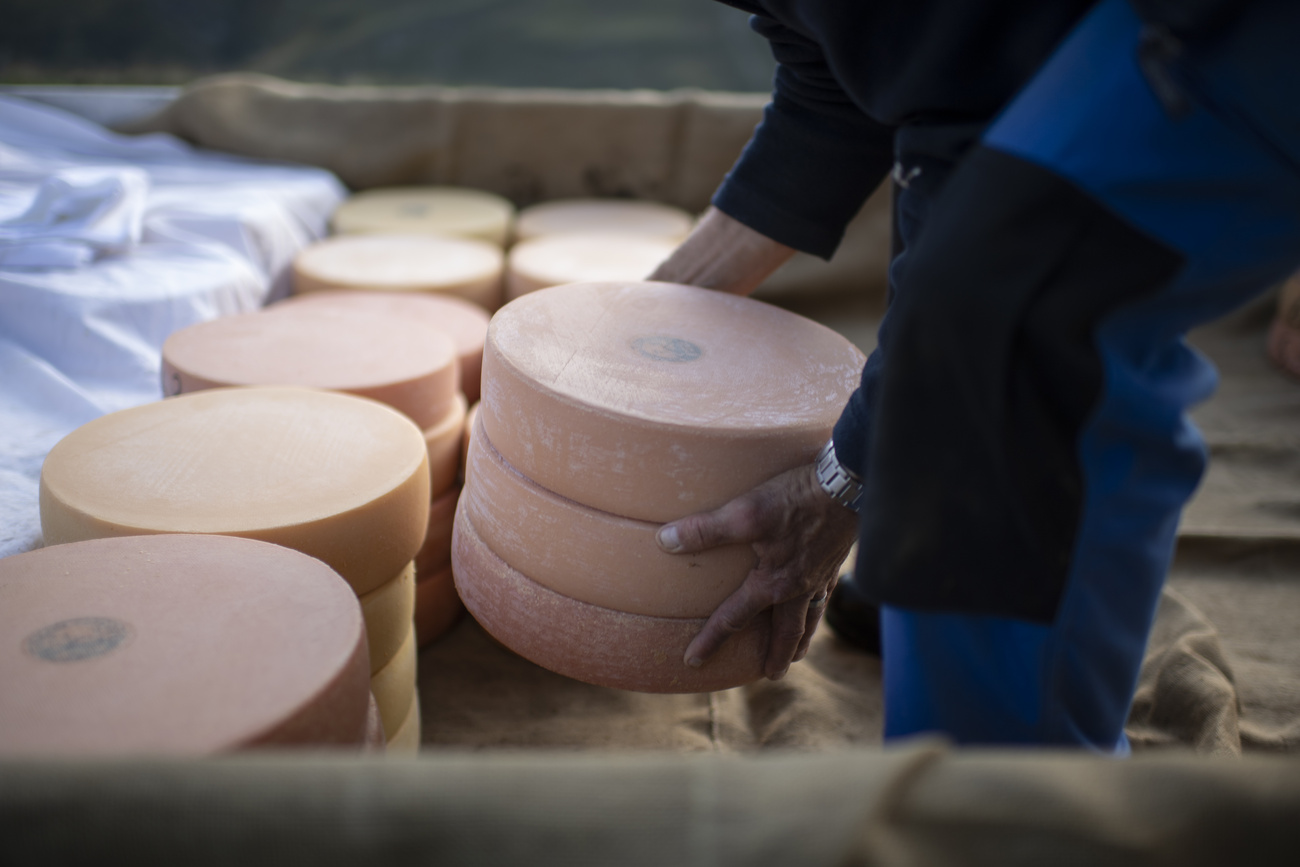
The shorter summer grazing period is also having an impact on production. The FSEA forecasts below-average production of alpine cheese for the current year. For Gruyère d’alpage, for example, the trade association expects a drop in production of around 10% compared with the previous year.

More
The difficult search for real Swiss cows
Given climate change, dry summers are set to become more frequent in the future. However, early descents from the alpine pastures must remain an emergency measure. According to Droz, transporting water by road or helicopter only makes sense if, for example, the farm in question has even less fodder available.
All alpine farms should therefore review their own water infrastructure and adapt it where necessary. The implementation of projects such as new reservoirs or the tapping of springs requires further funding from the Confederation and the cantons.
According to the FSEA, Switzerland has around 6,600 alpine pastures, of which around a third of the usable agricultural area is farmed in summer, producing 5,500 tonnes of alpine cheese each year.
More
Heatwaves and drought hit Swiss cheese makers
+ How we produce English news
Translated from French, reviewed by an English Department journalist.
External Content

In compliance with the JTI standards
More: SWI swissinfo.ch certified by the Journalism Trust Initiative

You can find an overview of ongoing debates with our journalists here . Please join us!
If you want to start a conversation about a topic raised in this article or want to report factual errors, email us at english@swissinfo.ch.