








Swiss financial watchdog ends Julius Bär proceedings
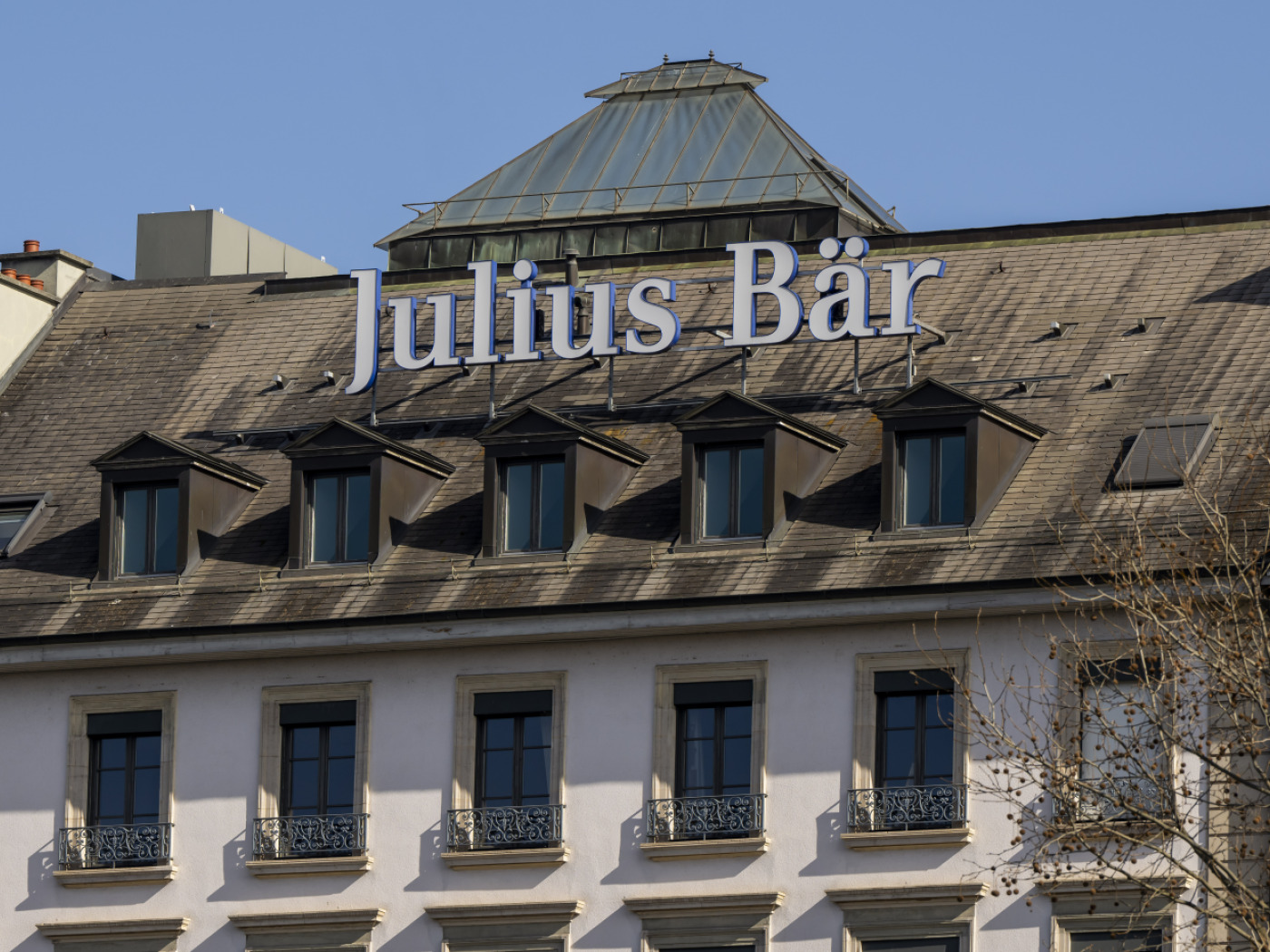
The Swiss Financial Market Supervisory Authority (FINMA) has concluded a compliance procedure against Julius Bär – the fifth in less than ten years – relating to the wealth manager’s collapse over private loans granted to the Signa Group and a money-laundering case.
Select your language
Generated with artificial intelligence.
Listening:
Swiss financial watchdog ends Julius Bär proceedings
Among the numerous corrective measures imposed by FINMA, the bank will be required to hold additional capital of CHF250 million ($300 million), the regulator said in a statement on Tuesday. Distributions to shareholders, such as dividends, will have to be approved by FINMA.
FINMA has also confiscated gains of around CHF10 million that Julius Bär had made from the two groups of Russian clients, described as “politically exposed”. The regulator has also initiated proceedings against three unnamed former employees of the bank who are “potentially responsible for breaches of supervisory law or internal guidelines”.
The financial markets regulator noted that in December 2024 it had launched a compliance procedure relating to “several loans granted to various entities within a European group”. FINMA is referring, without naming it, to the collapse of private loans granted to the Austrian group Signa, which has since gone into administration.
In 2023, Julius Bär was forced to record a write-down of CHF606 million on loans granted to Signa by the businessman René Benko, who was sentenced to prison in Austria in 2025. In the wake of this, the bank’s chief executive, Philipp Rickenbacher, was sacked.

More
Austrian property magnate Benko sentenced to prison
In August 2025, FINMA launched new proceedings against the asset manager “regarding possible breaches of anti-money laundering rules in connection with clients associated with two Russian politically exposed persons (PEPs)”, it noted in its statement.
Financial targets confirmed
In a separate statement, Julius Bär said it had taken “extensive corrective measures”, including exiting the private lending business, implementing a revised risk management and compliance framework, strengthening governance structures and appointing a new management team.
According to the bank, the additional CHF250 million in Common Equity Tier 1 (CET1) capital – CHF500 million less than initially required – represents a Common Equity Tier 1 (CET1) ratio of 9.4%. Julius Bär’s CET1 ratio stood at 18.5% at the end of June.
The group also confirmed that it is continuing with its 2026–2028 strategic cycle and maintaining its medium-term objectives. It has also submitted an application to FINMA for authorisation of a share buyback programme.
More
What the too-big-to-fail Swiss parliament vote means for UBS
+ How we produce news in English
Translated from French, reviewed by an English Department journalist.

In compliance with the JTI standards
More: SWI swissinfo.ch certified by the Journalism Trust Initiative

You can find an overview of ongoing debates with our journalists here . Please join us!
If you want to start a conversation about a topic raised in this article or want to report factual errors, email us at english@swissinfo.ch.