








Swiss Senate approves Erasmus+ funding amid debate on EU deals
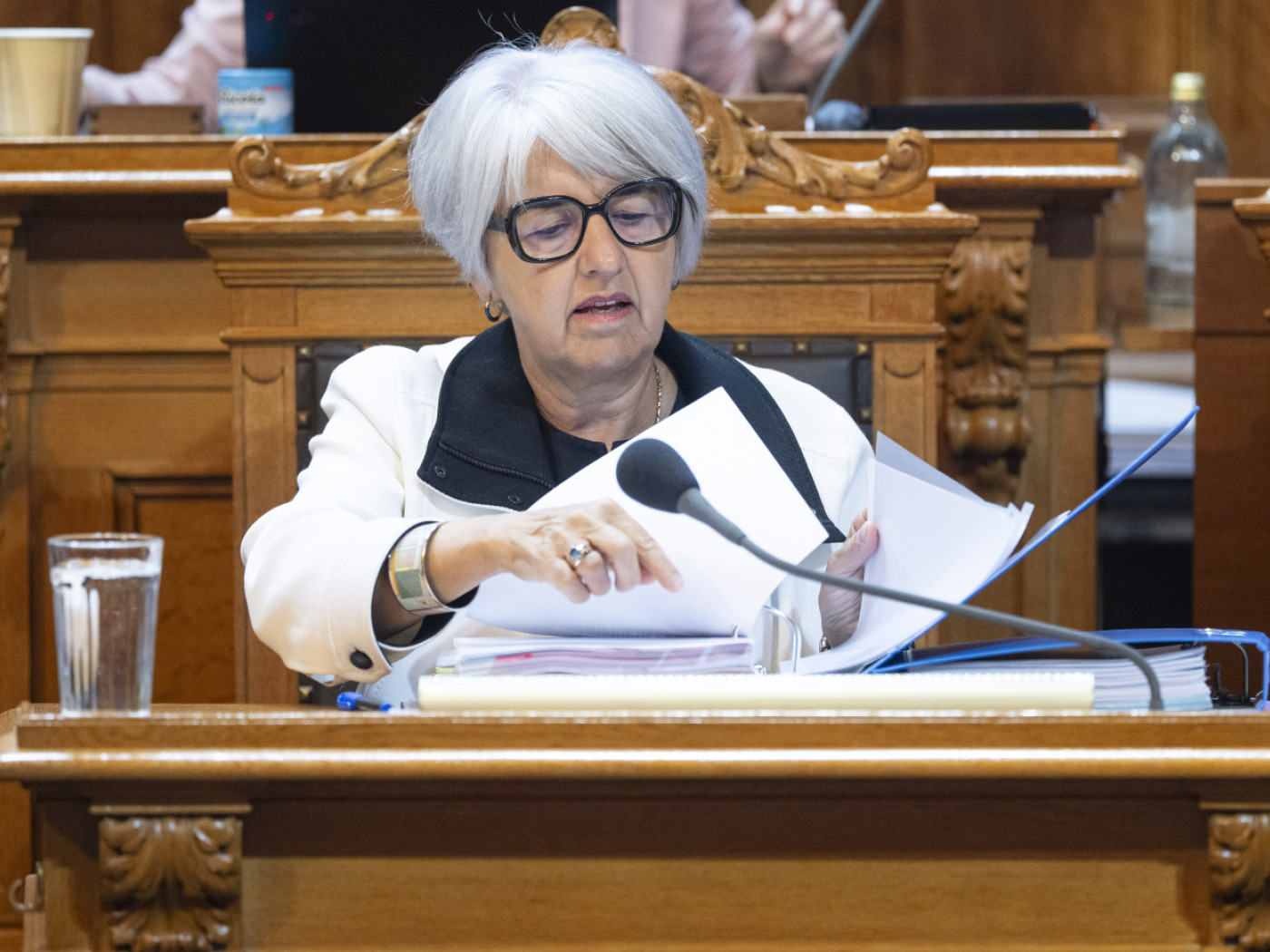
After around 22 hours of debate, the Senate approved the stabilisation part of the European Union treaty package on Thursday morning. The so-called Bilateral Agreements III will now go to the House of Representatives.
Select your language
Generated with artificial intelligence.
Listening:
Swiss Senate approves Erasmus+ funding amid debate on EU deals
On Thursday morning, the Senate voted on the final federal resolution in the stabilisation package – the commitment appropriation for Switzerland’s participation in the EU’s Erasmus+ education programme in 2027. This contribution of CHF193 million ($230 million) had been the subject of controversy in the run-up to the vote. The relevant Education Committee (WBK-S) had recommended a “yes” vote on the resolution, albeit by a very narrow margin.
The final vote in the committee was cast by Chairman Matthias Michel. He argued in favour of a “yes” vote in the Senate, arguing “a ‘no’ vote would mean we could not take part in the programme, which would be detrimental to Swiss students”. Participation would strengthen the skills of trainees and students, particularly in the field of vocational training. Ultimately, this would also benefit the economy.
Some centre-right members of the Senate expressed dissatisfaction at the size of the loan required. They were reluctant to approve additional expenditure given the strained federal finances and the austerity measures. The Senate Finance Committee (FK-S) had, due to the strained federal budget, recommended a “no” vote on the Erasmus+ loan by a narrow majority.
+ Swiss Senate gives clear backing to EU treaty package
Swiss President and Minister for Research and Education Guy Parmelin pointed out during the debate that the benefits of the programme far outweighed the costs. Furthermore, a parliamentary rejection of the appropriation could be viewed negatively by the EU in its overall assessment of the discussions.
The Senate ultimately approved the commitment credit by 23 votes to 19, with 2 abstentions. Like all other resolutions in the stabilisation package, the matter will now be referred to the House of Representatives.
Food safety and health
Attention now turns to the “further development” section of the treaty package. A new agreement is to be concluded in the area of food safety. The agreement is intended to create a common food safety area. According to the Federal Council, the aim is to identify foodstuffs that pose a health risk at an early stage. Any harmonisation of Swiss and EU agricultural policy remains ruled out.
The health agreement is also part of the expansion of relations. The agreement is intended to strengthen cross-border coordination and cooperation with the EU in the event of a health crisis, such as a pandemic. Specifically, Switzerland is to gain access to the EU’s health security mechanisms and to the European Centre for Disease Prevention and Control.
Interior Minister Elisabeth Baume-Schneider will oversee the provisional conclusion of the EU negotiations in the Senate. The dossier will then be referred to the House. The electricity agreement will be dealt with at a later date, as the relevant Senate committee has not yet completed its work on it.
+ How we produce news in English
Translated from German, reviewed by an English Department journalist.

In compliance with the JTI standards
More: SWI swissinfo.ch certified by the Journalism Trust Initiative

You can find an overview of ongoing debates with our journalists here . Please join us!
If you want to start a conversation about a topic raised in this article or want to report factual errors, email us at english@swissinfo.ch.