








To save football, it’s time to start over – beyond FIFA

Select your language
Generated with artificial intelligence.

Listening:
To save football, it’s time to start over – beyond FIFA
Football’s world governing body, the Switzerland-based FIFA, is beyond reform; a better idea is to abolish it and replace it with a new organisation, argues ethics expert Thomas Beschorner.

FIFA has once again shown its ugly side. Multiple ethical violations during the recent World Cup are proof enough. But that may just be the tip of the iceberg. Below the surface, further developments continue to call into question the integrity of the organisation.
For example, the FIFA president, Swiss man Gianni Infantino, faces accusations of abuse of office in connection with a campaign for his re-election.
And now FIFA, a private association under Swiss law, wants to further commercialise football, with shares in the World Cup to be sold off to a group of investors.
As football fans know, the end of one game always means the start of preparations for the next. Therefore, instead of continuing to be outraged by FIFA’s schemes, we should ask more fundamental questions about how ethical standards and integrity could be established in the organisation of world football.
The yellow card option: reform
A first approach could be to initiate fundamental reforms within FIFA, with the aim of guaranteeing a maximum of integrity. But this hardly seems realistic, given that the organisation’s problems are not isolated but structural.
In FIFA, we have a body where power is highly concentrated. Its governance structures offer little space for the types of checks and balances needed to bring strategic considerations into appropriate alignment with moral ones.
More
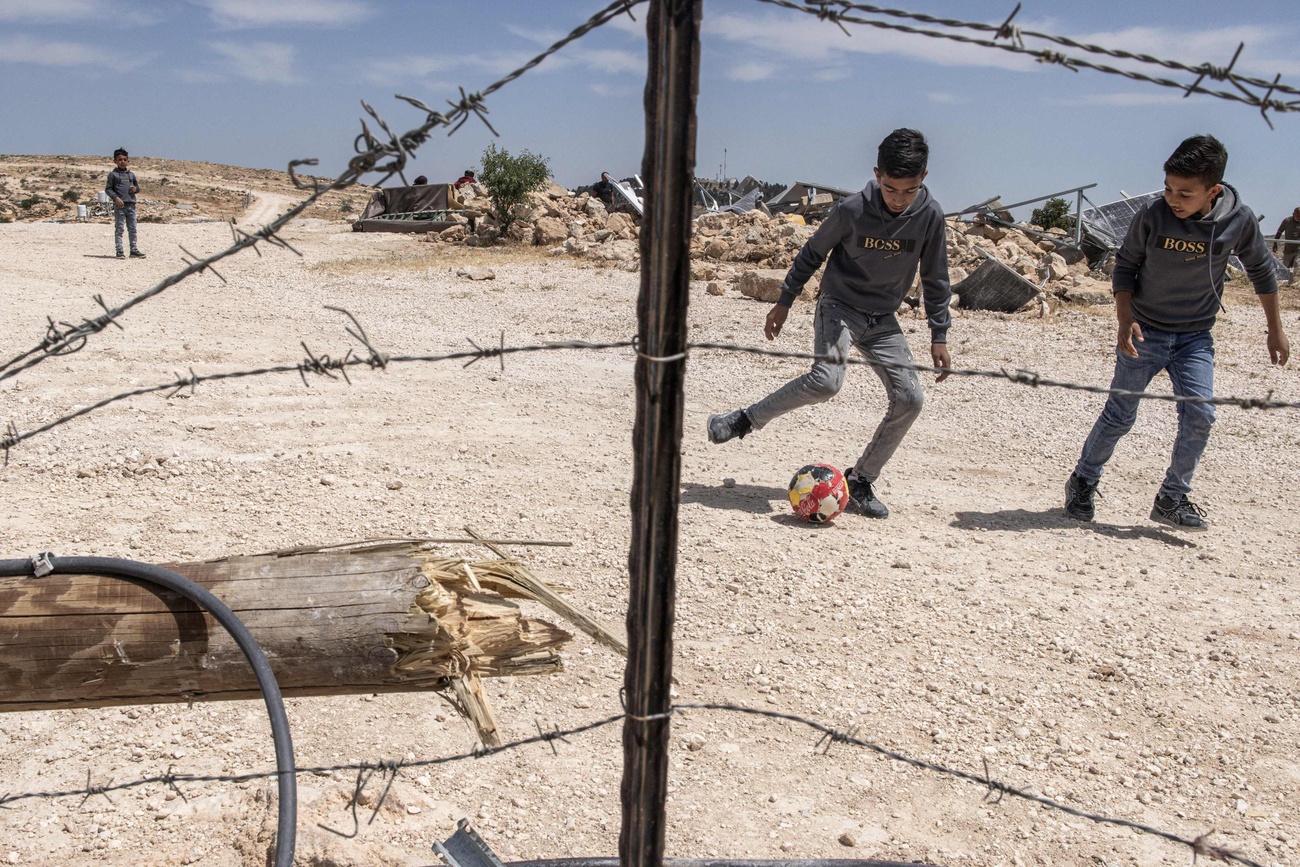
Why Switzerland joined Trump-friendly FIFA to fund mini pitches in Palestine
For years, ethics commissions at FIFA have been more ceremonial or symbolic than actually effective in shaping the association. In some cases, critical voices from the commission which were unwelcome to FIFA were simply dismissed.
The red card option: abolish
And so, if we drop the idea of FIFA’s capacity to reform as a realistic scenario, a second option would be to abolish it altogether and replace it with a new body.
Practically, this would be possible. FIFA is neither more nor less than an association of national football associations – any one of which can terminate its membership without further ado and join another association.
Hypothetical scenarios can often act as a spur for thinking about real options. What if, for example, powerful European national associations, or all associations in UEFA along with others – such as Argentina, Brazil and Japan – were to pull out of FIFA and try to establish a new world football association?
Another footballing saying is to take “one game at a time” – wins rarely come easy. The same applies here. Such an undertaking would be no small matter, and would require coordinated steps by a range of actors. But there has been a certain alignment in the aftermath of the 2026 World Cup.
Common cause
For example, there is the Council of Europe and its Secretary General, former Swiss minister Alain Berset. There is UEFA and some national associations – Germany, Norway, and Belgium, for example. The Swiss Football Association is also examining whether it wants to back Infantino’s candidacy for re-election.
More
Why Switzerland remains at the heart of corruption in sport
All of these people and organisations, as well as various others, are currently not shy about massively criticising FIFA. UEFA, for example, has been blunt: “None of us owns football. It is not for FIFA to sell it,” it wrote.
It seems time to take action against FIFA in order to save a sport in which fairness and decency – both on and off the pitch – are of great importance. Otherwise, in four years’ time, we will simply be caught up in outrage again.
The views expressed here are those of the author and do not necessarily reflect the views of Swissinfo.
This text has also appeared in a similar form in the St Galler TagblattExternal link and various other Swiss newspapers.
Edited by Balz Rigendinger. Translated from German, sub-edited by Domhnall O’Sullivan

In compliance with the JTI standards
More: SWI swissinfo.ch certified by the Journalism Trust Initiative

You can find an overview of ongoing debates with our journalists here . Please join us!
If you want to start a conversation about a topic raised in this article or want to report factual errors, email us at english@swissinfo.ch.