








Switzerland helps fight Europe’s fires – but official cooperation remains tricky
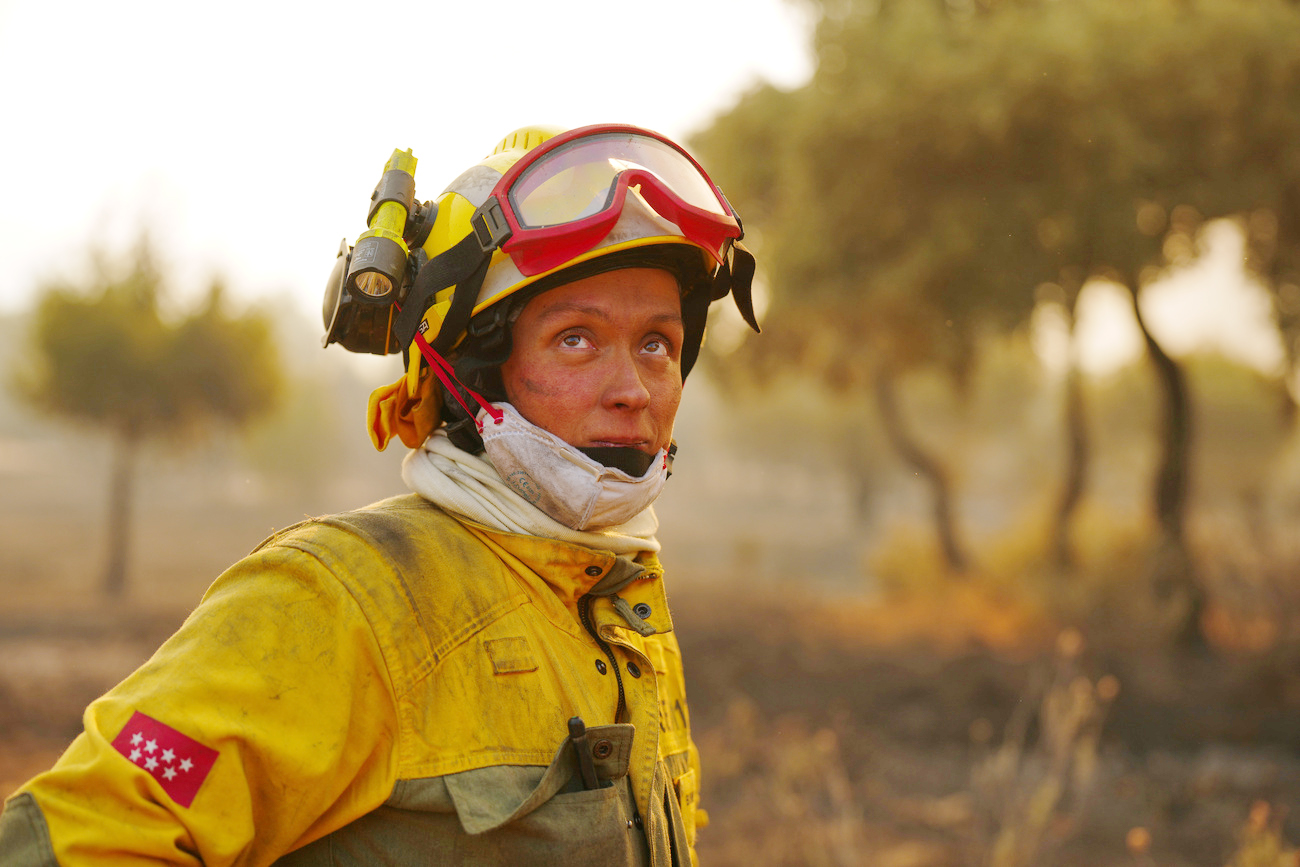
As forest fires rage in Europe, Switzerland is helping to try put them out. But if it came to asking for aid itself, Bern could find itself at the back of the line – especially if EU resources were already stretched.
Select your language
Generated with artificial intelligence.
Listening:
Switzerland helps fight Europe’s fires – but official cooperation remains tricky

“What we are currently going through in Europe is the start of a new era of wildfires and extreme weather events,” says Christine Eriksen, a senior researcher at the Center for Security Studies at the federal technology institute ETH Zurich.
In July, big wildfires in France and Spain have already affected more than 220,000 hectares of land – ten times the area of Lake Neuchâtel, the largest wholly-Swiss body of water.
Preparing for the future
Eriksen’s core area of expertise is wildfires and how society can become more resilient. For her, it’s clear that Switzerland will also have to face fires in the future. “If we gather knowledge now, we will be better prepared for what comes,” she says.
External Content
The scale of the fires in Europe is not the only challenge. “The severity and the duration of heatwaves is also unprecedented,” Eriksen says.
France and Spain in particular have been improving preparedness for wildfires, the researcher adds. Here, the European Union (EU)’s civil protection mechanism plays a big role. Already in 2001, the EU began pooling emergency response capacities. Since then, member states have helped each other react to big natural disasters.
In addition to EU member states, ten other countries are also in the mechanism, including the European Economic Area (EEA) states Norway and Iceland, as well as all EU candidate countries such as Albania, Serbia and Turkey.
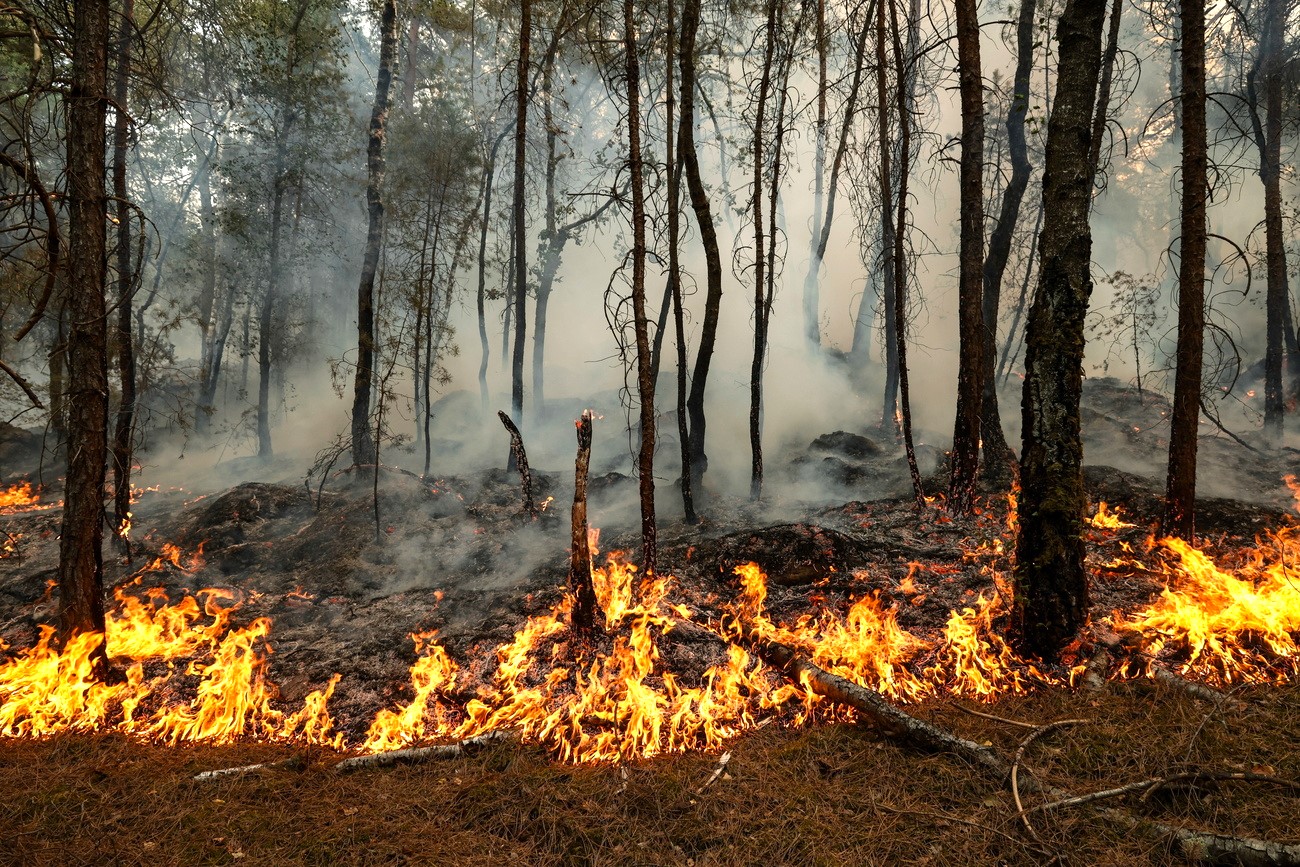
>> Why are so many fires flaring up in 2026, and what can be done to prevent them?
More
How to prevent wildfires in Switzerland and Europe
Bern on the sidelines
Switzerland, however, still today stands only on the sidelines of the system. If emergency resources on the continent were to become scarce, and a distribution battle ensued, Bern would likely fall behind EU members and partner states in the priority list.
Yet for once, this particular case of Swiss isolation is not the result of political decisions: in 2023, the parliament in fact approved a motionExternal link calling on the government to join the EU civil protection mechanism (UCPM). Ministers took actionExternal link and preparations are underway – but Switzerland is still stuck in the waiting roomExternal link.
The problem is that EU rules are not designed to accommodate non-EU states like Switzerland – which means it cannot officially join the mechanism for now. This could change if the European Parliament follows the Commission’s proposal to amend the legislation – but this would only happen in 2027 at the earliest.
Swiss choppers in Europe
Until then, Switzerland still manages to cooperate somewhat with its neighbours thanks to a technical agreement, multilateral training exercisesExternal link, and, above all, acts of solidarity like sending firefighting helicopters and personnel to help react to disasters.
For example, three Super Puma helicopters belonging to the Swiss army are currently in action in Corsica. There, they fly seven hours a day, with each helicopter making over 20 water drops. “We fight fires which are just flaring up, meaning we manage to protect people, infrastructure and nature in time,” David Sochor, the mission team leader, tells swissinfo.ch.

In 2021 and 2023, Swiss helicopters and specialist teams helped to fight fires in Greece; in 2017, they were deployed in Italy, Portugal and Montenegro. This year, Switzerland also sent a fire brigade unit for the first time, to the French region around Bordeaux.
On the other hand, Switzerland has experienced its first emergency involving the UCPM – which any country hit by disaster, in Europe or beyond, can officially request. After the New Year’s fire in Crans-Montana this year, Bern activated the mechanism before several EU states quickly and unbureaucratically offered help, particularly via special transport and hospital places for victims of burns.
Case study of efficiency
“Crans-Montana showed us that when we need special resources – such as air ambulances – we don’t have enough,” says Roland Bollin, who heads the International Affairs Unit at the Federal Office for Civil Protection (FOCP). “We also saw how efficiently this [EU] solidarity mechanism works,” he adds.
For the civil protection specialist, the EU’s aid pool is an example of how cross-border assistance can far exceed the capabilities of any single country: indeed, the EU now has a strategic reserve of 22 firefighting and rescue aircraft, as well as five helicopters. Twelve more firefighting aircraft have also been ordered, but there are delivery delays.
Seven firefighting aircraft and four helicopters from some seven countries, from Sweden to Turkey, are currently deployed in the fight against wildfires in France.
External Content
From the bottom of my heart, I want to thank the brave 🇵🇹 🇨🇿 🇮🇹 🇬🇷 🇸🇪 🇭🇷 🇩🇪 🇸🇰 🇹🇷 teams deployed to France and Spain to fight the blaze.
— Ursula von der Leyen (@vonderleyen) July 28, 2026External link
This is solidarity at its best, from the EU and beyond.
The courage and dedication of these firefighters is a reminder that when we stand… pic.twitter.com/vckWNLwJw1External link
Buy your own aircraft?
Could Switzerland procure its own aircraft for fighting fires? Bollin says this is currently “not practical”. This was the conclusion of an expert report published by the government in 2022, in response to a parliamentary motionExternal link. For the report, the risk is clear: “higher temperatures combined with longer dry periods increase the likelihood of more frequent and intense wildfires in Switzerland”. However, it added, “the opinion of experts involved in the report is that Switzerland should not procure aerial firefighting aircraft”.
Rather, they suggested, access to international resources should be clarified. “The resources available through the UCPM, such as firefighting aircraft or helicopters, should be considered.”
Emergency system under pressure
But as long as Switzerland is not a member of the EU mechanism, it remains unclear how the EU would respond to call for help by Bern in the event of a wildfire – especially in August or September, when resources are already stretched around the Mediterranean.
The UCPM is already under pressure, and if firefighting capacities are insufficient, it comes to a triage of resources. “In the case of competing requests [for help], it’s about where we can have the most impact,” an EU official told media this week.

For ETH Zurich expert Eriksen, the Crans-Montana disaster showed that Switzerland can turn to the UCPM. But what if Brussels had to choose between helping a partner state or Switzerland in the event of a wildfire? “Then I would assume a partner state would take priority,” she says – an assumption shared by Bollin from the FOCP.
In the end, it is about solidarity. UCPM countries pay a contribution based on economic strength. For Switzerland, this would currently mean around CHF11 million ($13.6 million) per year. In return, assistance to states is covered – minus a deductible of 10% to 25%.
Learning by doing
In a 2021 studyExternal link commissioned by the FOCP, Eriksen weighed up the pros and cons of a Swiss partnership with the UCPM. The advantages are clear: access to the pool of resources, to expertise and training programmes, and to operational experience. “The firefighters from French-speaking Switzerland who travelled to the Bordeaux region are not only providing help. They are also gaining valuable experience,” Eriksen says.
Bollin echoes this. “If we want to develop civil protection further, we need to become more internationally networked. We can only learn,” he says. He adds that the EU resource pool has “incredible capacities”, and that individual emergency personnel are highly specialised. In addition, the pool builds its capabilities more and more each year and with each deployment; the UCPM is activated on an almost weekly basis.
But Switzerland could also make an important contribution. “It brings enormous experience in the field of humanitarian aid,” Eriksen says. Bollin points to Switzerland’s know-how when it comes to nuclear, biological and chemical events, or in the protection of critical infrastructure. “Switzerland is also very strong in the area of prevention,” he says.
Prevention rather than cure
Currently, with climate-change-driven devastation impacting Europe, prevention efforts in particular are becoming more important.
>> The graph below shows how wildfires have become more problematic in France over the last decade:
External Content
This week, according to the German Frankfurter Allgemeine ZeitungExternal link newspaper, an EU official said that member states needed to do more on prevention. “Otherwise we will be unable to respond in future, even if we have 100 times as many aircraft,” he said.
Europe is entering a new era of wildfires. Swiss personnel have been gaining experience in Corsica, Bordeaux and other parts of the continent. The crucial question is whether the country can count on help itself in the event of the next major fire.
Join the debate:
External Content
Edited by Pauline Turuban. Translated from German, sub-edited by Domhnall O’Sullivan

In compliance with the JTI standards
More: SWI swissinfo.ch certified by the Journalism Trust Initiative

You can find an overview of ongoing debates with our journalists here . Please join us!
If you want to start a conversation about a topic raised in this article or want to report factual errors, email us at english@swissinfo.ch.