








US threatens Switzerland with new tariffs over forced labour imports
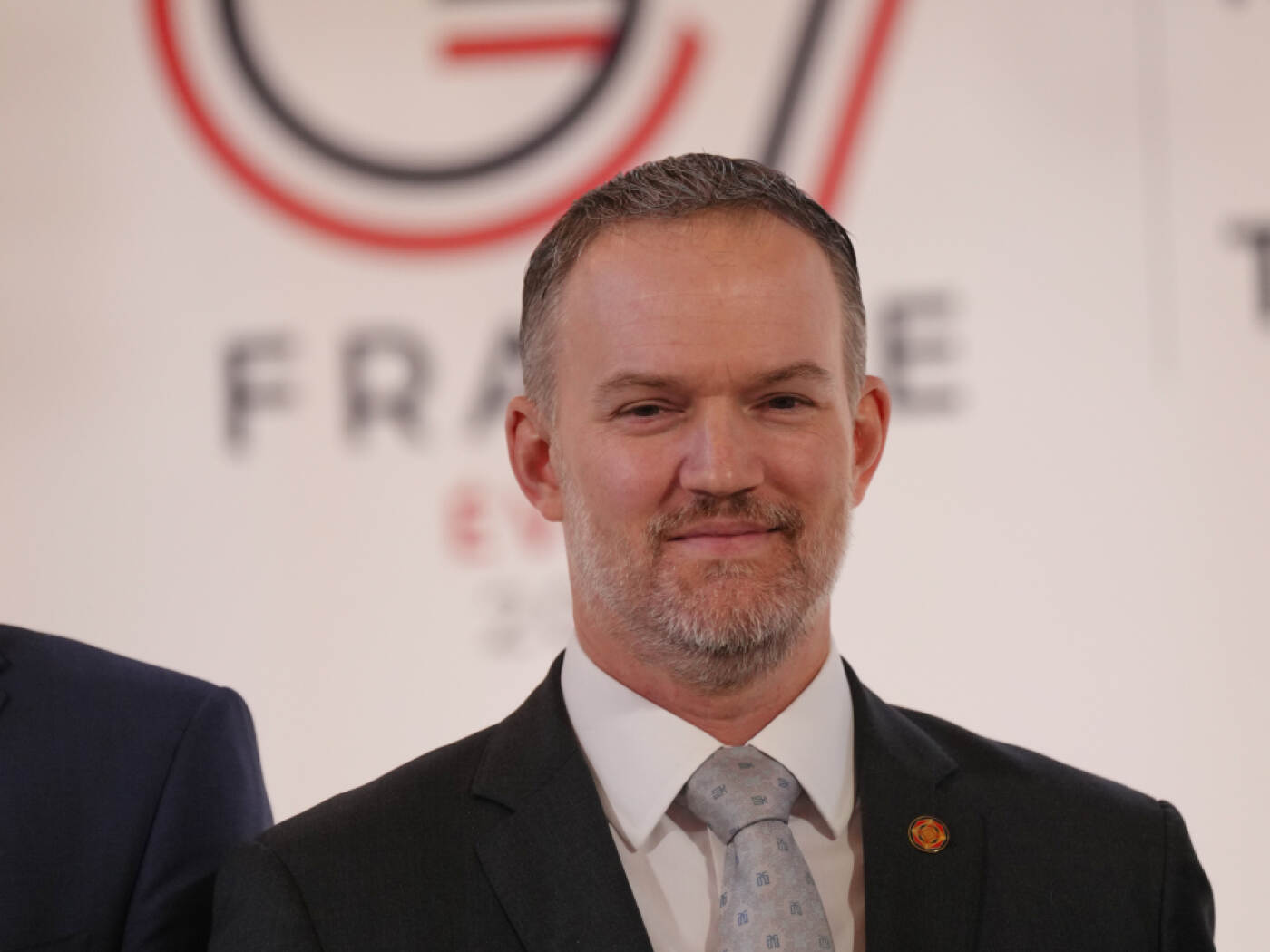
The United States is threatening Switzerland with new tariffs of 12.5% on products linked to forced labour.
Select your language
Generated with artificial intelligence.

Listening:
US threatens Switzerland with new tariffs over forced labour imports
+ Get the most important news from Switzerland in your inbox
The US is stepping up pressure on Switzerland in the ongoing trade dispute. US President Donald Trump’s administration has proposed fresh punitive tariffs on around 60 trading partners, including Switzerland.

More
Explainer: How the new US tariffs are already impacting the Swiss economy
Washington accuses the countries involved of failing to do enough to tackle imports of goods produced using forced labour. Products such as semiconductors, coffee, beef and fruit would be exempt from the new tariffs.
A report published in Washington on Tuesday (local time) by US Trade Representative Jamieson Greer lists Switzerland among 54 economies that, according to the US, do not have a clear ban on such imports. Washington is proposing additional tariffs of 12.5% on 45 of those countries.
Others – including Canada, Ecuador, the European Union (EU), Indonesia, Mexico, Pakistan, Argentina, Bangladesh, Cambodia, El Salvador, Guatemala, Malaysia, Taiwan and the United Kingdom – would face a 10% tariff.

More
US tariffs force Switzerland to rethink trade ties
The US says that while the EU has introduced a similar ban, enforcement is considered insufficient.
“The failure of our most important trading partners to address the importation of goods made with forced labour is unacceptable,” Greer said, according to ReutersExternal link. “This creates a situation where American workers are forced to compete globally on an uneven playing field.”
External Content
ReutersExternal link also reported on Monday that the US had proposed a 25% tariff on many Brazilian goods, following an investigation into the country’s digital trade practices and preferential tariffs. The trade agency is also expected to publish the findings of another major Section 301 probe into excess industrial capacity in 16 trading partners, including China.
New legal basis
The proposals have yet to be finalised. A consultation will run until early July, followed by public hearings. The Trump administration is also seeking to establish a new legal basis for its trade policy.
In February, the US Supreme Court ruled that Trump could not rely on emergency powers to impose earlier punitive tariffs, as tariff-setting is generally the responsibility of Congress. The new measures are instead justified under provisions of the Trade Act of 1974 and efforts to combat forced labour.

More
How Trump is manoeuvring Switzerland closer to the EU
The report comes at a sensitive time for Switzerland, as Bern and Washington are currently negotiating a settlement to the trade dispute.
SECO rejected the accusations as early as April
The Swiss State Secretariat for Economic Affairs (SECO) director Helene Budliger Artieda said only last week that Switzerland was “in the final stretch” of its talks with the US. She voiced confidence that a deal could be reached by the July 9 deadline set by Trump.
Alongside the baseline tariff rate of 10%, country‑specific surcharges are also under discussion, with 21% previously cited for Switzerland.
Switzerland has firmly rejected Washington’s allegations of forced labour. Artieda said as early as April that forced labour is prohibited under Swiss constitutional, civil and criminal law.
She added that Switzerland plays a leading role internationally, having been the first country to include a ban on forced labour in its public procurement legislation. Due diligence requirements for companies have also been tightened further.
According to the US, however, Switzerland lacks a clear ban on imports of goods made with forced labour. Washington argues that this could distort competition.
SECO, for its part, insists there is no evidence that Swiss trade practices disadvantage US companies or that supply chains linked to Switzerland benefit from forced labour. It says additional tariffs are therefore neither justified nor an effective way of tackling the problem.
Adapted from German and Reuters by AI/sp
We select the most relevant news for an international audience and use automatic translation tools to translate them into English. A journalist then reviews the translation for clarity and accuracy before publication.
Providing you with automatically translated news gives us the time to write more in-depth articles. The news stories we select have been written and carefully fact-checked by an external editorial team from news agencies such as Bloomberg or Keystone.
If you have any questions about how we work, write to us at english@swissinfo.ch
External Content

In compliance with the JTI standards
More: SWI swissinfo.ch certified by the Journalism Trust Initiative

You can find an overview of ongoing debates with our journalists here . Please join us!
If you want to start a conversation about a topic raised in this article or want to report factual errors, email us at english@swissinfo.ch.