








September 27 vote: Swiss neutrality initiative could face heavy defeat
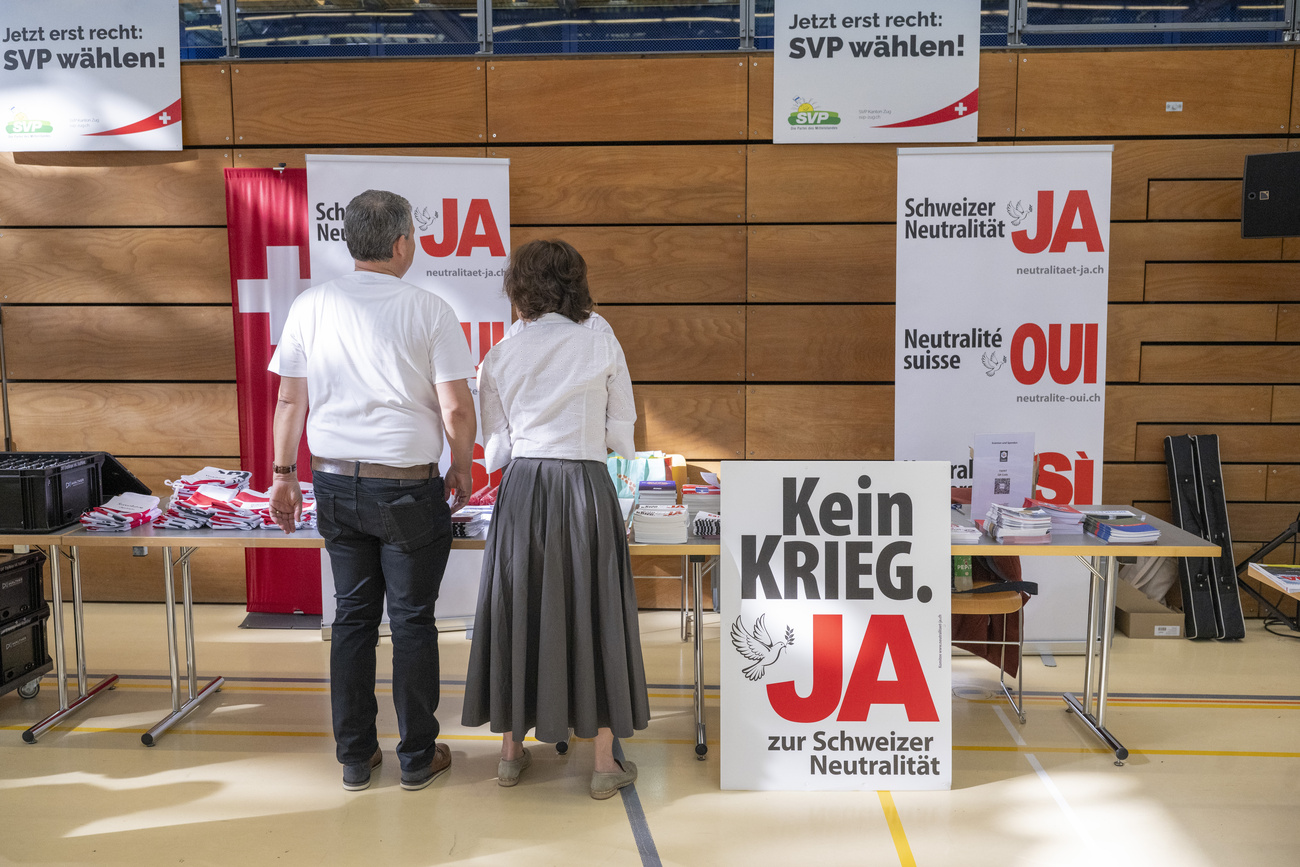
An initiative to anchor a strict interpretation of Swiss neutrality in the Constitution is heading for defeat, according to the second official vote poll by the Swiss Broadcasting Corporation (SBC). Support for the food security initiative has also eroded during the campaign, leaving it on course for rejection at the ballot box.

With around ten days to go before the September 27 vote, the neutrality initiative is in a precarious position.
Opposition to the proposal – which seeks to anchor a strict interpretation of Swiss neutrality in the Constitution – has increased by 9 percentage points in less than a month. According to the second SBC opinion poll, published on Wednesday, 63% of voters now intend to reject the initiative launched by Pro Suisse, while only 34% plan to support it. Three per cent remain undecided. The levels of support are similar among Swiss citizens living abroad.
External Content
The shift is visible across all sections of the population. Even among supporters of the right-wing Swiss People’s Party, the only party backing the initiative, support has fallen by nine percentage points in a month to 77%.
“It’s not one of the [right-wing] party’s favourite issues,” said Lukas Golder, a political scientist at the gfs.bern institute that carried out the survey. “On issues such as migration or relations with the European Union, the grassroots usually rally more firmly behind the official line.”
Voters from all other parties are increasingly likely to reject the proposal. Those with no party affiliation, who were still in favour at the start of the campaign, have also swung over to the no camp. Only those who express a strong distrust of the government continue to offer the proposal lukewarm backing.
The urban-rural divide identified in the first poll has also narrowed. The initiative is now facing broad opposition in rural areas as well.
Opponents appear to hold a clear advantage in the battle of arguments. More than two-thirds of respondents believe the initiative would weaken Switzerland’s security by limiting its ability to cooperate with other countries.
“A rejection of the initiative is clearly the most likely outcome,” say political scientists at gfs.bern.
>> Our explanatory article on the neutrality initiative:
More
Should Swiss neutrality be stricter? Voters will decide
Food security initiative also losing momentum
Support for the food security initiative, which calls on the Swiss federal authorities to promote the production and consumption of plant-based foods, has also declined since the first poll.
In mid-August, supporters and opponents were running neck and neck. Today, nearly two-thirds of respondents (64%) say they intend to vote no. Support has dropped to 33%, while 3% remain undecided.
Swiss citizens abroad, who backed the initiative a month ago, have turned against it. A majority of 59% now plan to reject the proposal, while 37% are in favour and 4% are undecided. There are two explanations for this: the Swiss diaspora tends to vote more in favour of environmental issues and is less exposed to national debates about the initiative’s shortcomings.
External Content
Only Green Party voters continue to support the initiative (78%). Supporters of the Social Democratic Party and the Green Liberals, who initially backed it, have now joined the no camp.
But many of the arguments put forward by the initiative’s supporters continue to resonate with a majority of voters. Large majorities agree that global warming and pollution threaten water resources and that action is needed.
But the solutions proposed by the initiative are struggling to win people over. The arguments of the opponents, who highlight the initiative’s weaknesses, are gaining ground. More than two-thirds of those surveyed consider it unrealistic to raise the country’s food self-sufficiency rate to 70% within ten years.
Golder expects the momentum for a no vote to continue to grow in the run-up to the ballot and believes it is on course for defeat.
>> Our explanatory article on the food security initiative:

More
The Swiss food security initiative: more sustainable agriculture or ‘vegan diktat’?
Edited by Pauline Turuban. Translated from French, sub-edited by Simon Bradley/ac

In compliance with the JTI standards
More: SWI swissinfo.ch certified by the Journalism Trust Initiative

You can find an overview of ongoing debates with our journalists here . Please join us!
If you want to start a conversation about a topic raised in this article or want to report factual errors, email us at english@swissinfo.ch.