








Switzerland hosts major European disaster response exercise

Switzerland and European countries are stepping up their cooperation in civil protection. This is the first time that Switzerland has organised and hosted such an exercise. Some 500 people are taking part in the simulated earthquake disaster in the cantons of Vaud and Geneva.
Select your language
Generated with artificial intelligence.
Listening:
Switzerland hosts major European disaster response exercise
From Tuesday to Friday, exercises are taking place in Epeisses (in canton Geneva), Geneva and Payerne (in canton Vaud) under the European Union’s UPCM civil protection mechanism. The aim is to practise international cooperation in the aftermath of a major earthquake.
+ Zurich research could help predict earthquake patterns
More than 250 emergency responders from EU countries and Armenia are expected to take part. Swiss participants include civilians, members of the armed forces and volunteer role-players.

More
Swiss AI model ‘listens’ to the mountain to detect avalanches
Under the scenario for the EU MODEX Switzerland 2026 civil protection exercise, the damage in the cantons of Vaud, Geneva and Fribourg is so severe that Switzerland has to request assistance through the UPCM civil protection mechanism.
The mechanism came into play at Crans-Montana
If national resources are overwhelmed, Switzerland, like any other UPCM-associated country, can request assistance from its European partners. In January, Switzerland activated the mechanism following the devastating fire in Crans-Montana, in canton Valais, which killed 41 people and injured 115 others. This support enabled patients to receive treatment in several countries.
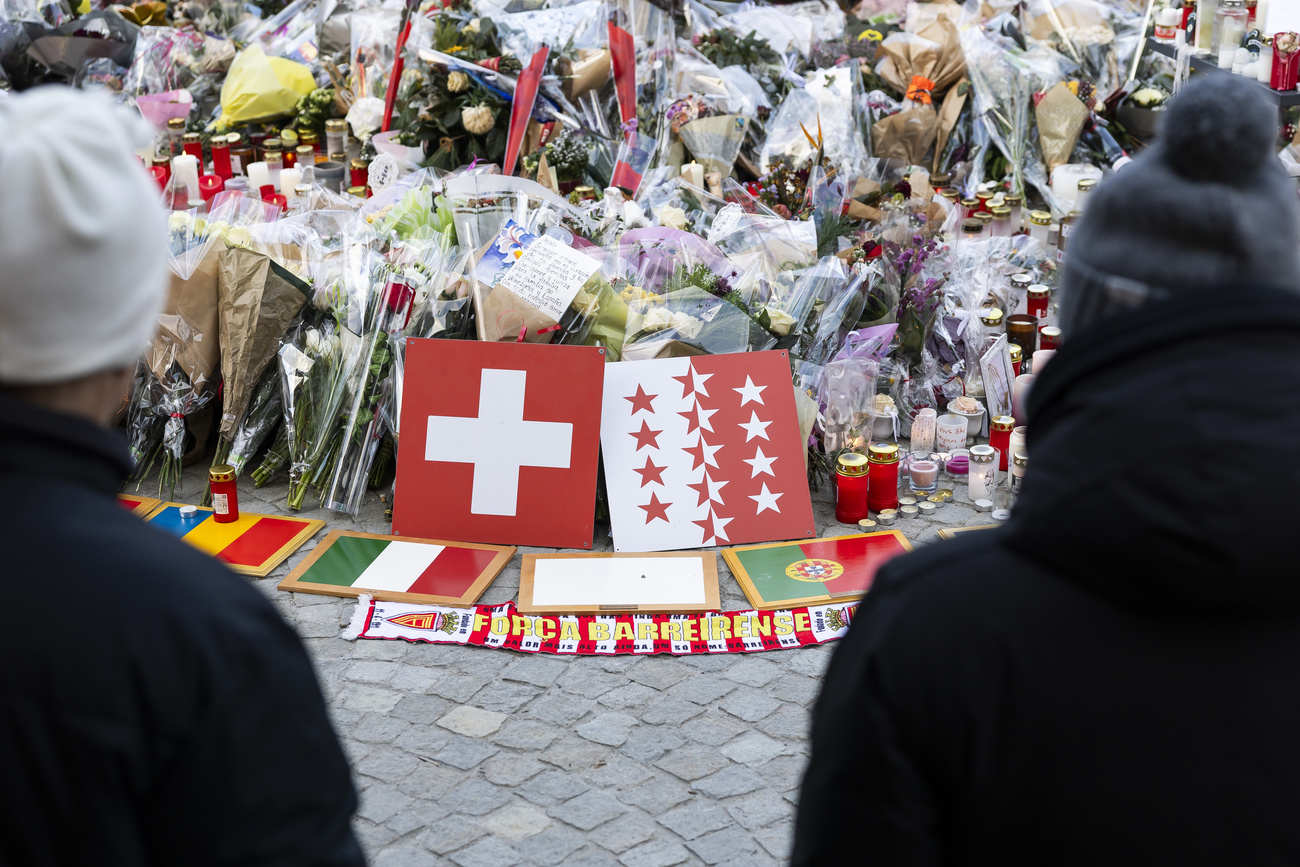
More
Crans-Montana tragedy highlights limits of Swiss federal system
From Tuesday afternoon, additional teams were deployed to deal with the scale of the simulated earthquake. Under the exercise scenario, volunteers playing the role of casualties were trapped beneath two piles of rubble in Epeisses.
“It is particularly important to test how well teams from different countries can work together,” Philippe Boeglin, spokesperson for the Federal Office for Civil Protection, told the Keystone-SDA news agency. “We need to speak the same technical language to avoid losing valuable time,” said François Fleuti, commander of Vaud Civil Defence.
Planned improvements
At the site, his team and their counterparts from Geneva spent the morning searching for, locating and rescuing people trapped beneath the rubble. Once the area had been assessed using specialist equipment and search dogs, rescue operations began. The rubble first had to be ventilated to prevent a build-up of gas or other hazardous substances. The site also had to be stabilised to ensure it was safe for rescue teams to work, the Vaud commander explained.


More
Truth or tale: Is it true Switzerland has enough bunkers for its population in case of a war?
The exercise was carried out under realistic conditions. The aim is to deal with the disaster using national resources in the first instance, with international assistance requested only if they prove insufficient, according to the spokesperson for the Federal Office for Civil Protection. “In Switzerland, we’re only at the start of the process. We’ll need to draw a lot of lessons from this and make further improvements,” the Vaud official said.
During the exercise, Switzerland is coordinating the entire operation, from the arrival of international teams at the border to their deployment in the affected areas and their eventual return home. Several federal agencies, cantonal authorities, civil protection units and the army have been mobilised.
For this exercise only, members of the Swiss Civil Protection service are wearing uniforms displaying the EU flag as part of EU MODEX Switzerland 2026.
+ How we produce news in English
Translated from German, reviewed by an English Department journalist.

In compliance with the JTI standards
More: SWI swissinfo.ch certified by the Journalism Trust Initiative

You can find an overview of ongoing debates with our journalists here . Please join us!
If you want to start a conversation about a topic raised in this article or want to report factual errors, email us at english@swissinfo.ch.