








Switzerland is the depositary state for 75 international treaties – what does that mean?

Switzerland is best known as a depositary state in connection with the Geneva Conventions. In this role, it has clearly defined responsibilities but is constantly asked to do more.
Select your language
Generated with artificial intelligence.
Listening:
Switzerland is the depositary state for 75 international treaties – what does that mean?

International treaties govern relations between states. Their scope is enormous: for example, they set out how states should behave during war, determine when tariffs may be imposed, or specify the technical standards for telephones. At the end of negotiations, the parties to the agreement sign a document.
The role of depositary was established to safeguard the original treaty and handle the formalities that arise from it. Depositaries can be states or international organisations. Switzerland is depositary for 75 international treatiesExternal link. By far the best known are the Geneva Conventions, which form the core of international humanitarian law. They are central to the conduct of wars and conflicts and are thus frequently invoked – as is Switzerland’s often-mentioned “special responsibility” as their depositary state.
What are the duties of a depositary?
Legally, the matter is clear, says Robert Kolb, a professor of international law at the University of Geneva. “A depositary state is an administrative body. It is explicitly not a political function, but an administrative task,” he says. The role is governed by the Vienna Convention on the Law of Treaties, which regulates most issues relating to treaties between states.
The Swiss foreign ministry says the role is essentially “a notarial function”. The depositary safeguards the relevant documents – such as the treaty text, full powers to sign and instruments of ratification – and checks that they meet formal requirements. It must also communicate information to the parties and, where necessary, verify translations. It explicitly does not conduct any review of the content.
Some, however, see a broader role. Former foreign minister Micheline Calmy-Rey, for example, saidExternal link that Switzerland bears a special responsibility when it comes to Israeli-Palestinian conflict because it is the depositary state of the Geneva Conventions.

She is far from alone in taking this view. Both in Switzerland and abroad, there are regular calls for Switzerland to become more actively involved in matters relating to the Geneva Conventions. This was particularly clear last year, when Switzerland was asked to organise a conference on the war in Gaza on behalf of the UN General Assembly.
Switzerland was subsequently criticisedExternal link for not doing enough to ensure the conference took place. However, there had been so much opposition beforehand that holding the event appeared unrealistic. It was ultimately cancelled because too few states committed to attending. Israel, for example, argued that hosting such a conference was “part of the legal warfare against Israel”. The Palestinian representation also criticised the planned final declaration, saying it did not go far enough.

More
Failure of Middle East conference in Geneva reflects ‘too divided’ international society
For Kolb, these are political rather than legal debates. “As a depositary body under international law, the depositary state is by definition passive. It becomes active when explicitly requested to do so by the parties to the treaty or by the UN.”
There have been growing concerns in recent years about the erosion of international law. In the absence of effective enforcement of existing rules, states and organisations may increasingly resort to making political demands by other means.
In this context, Switzerland will probably continue to face such calls, partly because of how the country itself presents its roleExternal link: “Switzerland’s commitment to the Geneva Conventions is one of its foreign policy priorities and is in line with its long humanitarian tradition,” states the foreign ministry.
What are the challenges?
Geopolitical tensions or sanctions do not fundamentally change the duties of a depositary, the foreign ministry adds. “A delicate situation can arise, however, when an entity with disputed statehood seeks to accede to a treaty between states.”
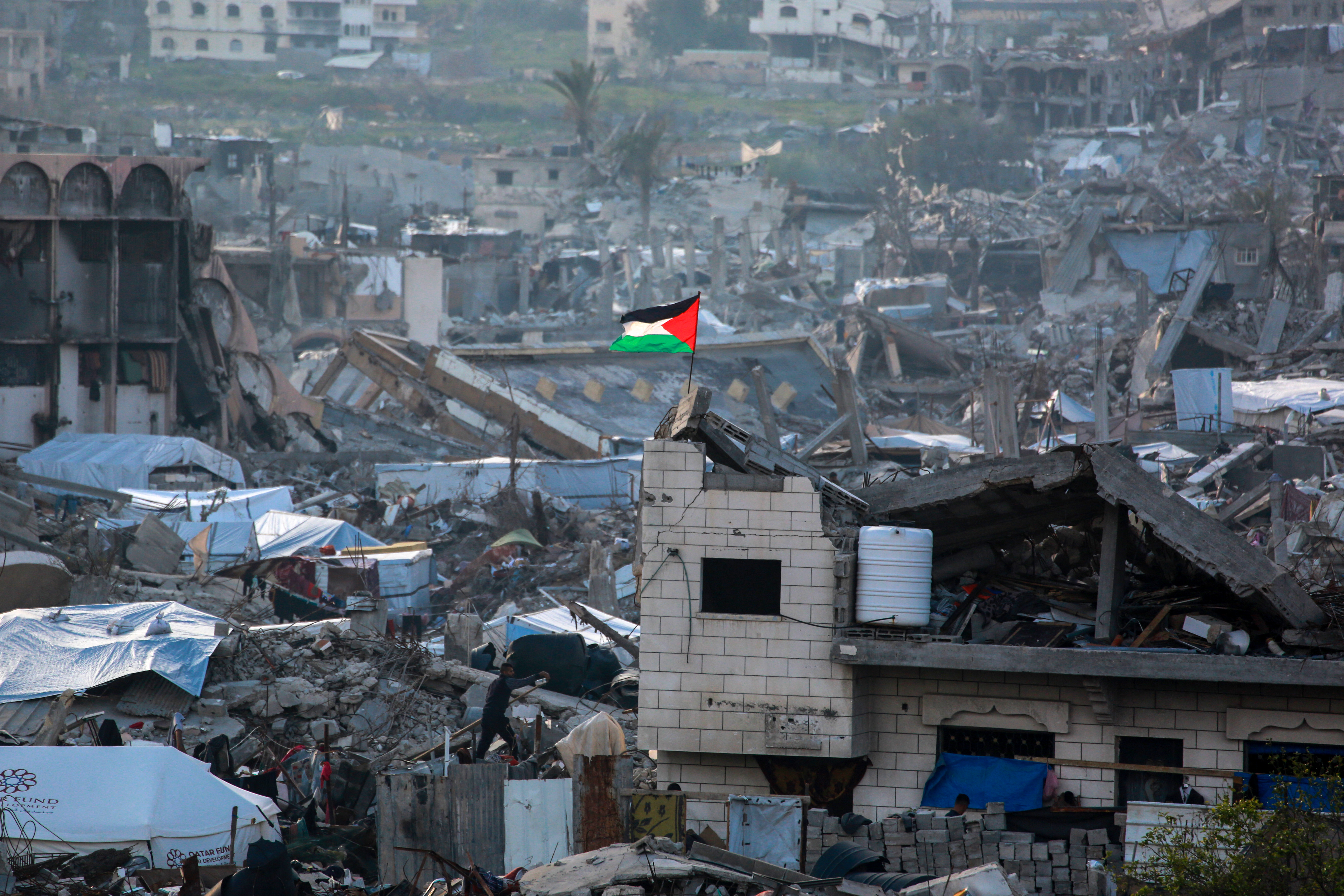
This was the case with the Occupied Palestinian Territory. In 2012, Palestine sought full membership of the UN, but its bid was blocked by a veto in the Security Council. It subsequently obtained “non-member state observer” status from a two-thirds majority of the UN General Assembly, allowing it to join other international organisations. In 2014, Palestine acceded to the Geneva Conventions. Switzerland, in its capacity as depositary state, carried out the procedure, even though it does not otherwise recognise Palestine as a state.
More
Why Switzerland doesn’t recognise Palestine as a state
There are also less sensitive challenges. For example, a signature may be invalid if the “wrong” minister signs a treaty. Under international law, only heads of state, heads of government or foreign ministers – or representatives authorised by them – have the authority to sign. The depositary must then ask the country concerned to provide a valid signature.
Does Switzerland actively seek this role?
A century ago, Switzerland was a popular choice as a depositary state. But its importance in this respect has declined with the rise of international organisations. Today, the UN or another international organisation usually takes on the role.
In the past, some multilateral treaties had no depositary. But this was complicated, explains Kolb. “Someone has to coordinate between the parties to the treaty. Nowadays, there is always a depositary to perform this task.”
In recent decades, Switzerland has only occasionally taken on new depositary responsibilities, and it does not actively seek them. However, the foreign ministry says it remains available when asked to assume the role.
More generally, Switzerland seeks to highlight its good offices, protecting-power mandates and mediation efforts as instruments of foreign policy. These give it greater scope to shape political developments and more frequent opportunities to build diplomatic capital.
Is digitalisation changing the role of the depositary?
Digital signatures are now possible for mainly technical agreements. But treaty texts are still consistently signed in physical form, and this centuries-old practice does not appear likely to change quickly. “Digitalisation has so far had only a limited impact on the work of the depositary state,” the foreign ministry says. The physical act of signing apparently underscores the serious intention to abide by the agreement. The original documents are kept in the Swiss Federal Archives in Bern.
There have been some changes. The UN, the largest depositary, has begun publishing amendments to treaties online on a central platform. By contrast, Switzerland – like virtually all other depositary states – sends notifications to affected states through its diplomatic missions. And these are printed on paper.

More
Our newsletter on geopolitics
Edited by Benjamin von Wyl . Adapted from German by Catherine Hickley/ac

In compliance with the JTI standards
More: SWI swissinfo.ch certified by the Journalism Trust Initiative

You can find an overview of ongoing debates with our journalists here . Please join us!
If you want to start a conversation about a topic raised in this article or want to report factual errors, email us at english@swissinfo.ch.