








Austria, Costa Rica and Malta: neutral but unlike Switzerland

The war in Ukraine has reignited the debate on neutrality. While the Swiss model stands out as an exception, several other states also continue to claim neutrality. Behind this term, however, lie very different realities.
Select your language
Generated with artificial intelligence.
Listening:
Austria, Costa Rica and Malta: neutral but unlike Switzerland

The Russian invasion of Ukraine and growing security tensions have put neutrality under pressure around the world. The accession of Finland and Sweden to NATO in 2023 and 2024 have reduced the number of neutral countries to around ten, according to the list compiled by the foreign ministryExternal link.
Switzerland has traditionally symbolised neutrality in Europe. Its model is based on several historical and legal features that make it unique.
First, Switzerland is the oldest neutral country in the world. Its neutrality has been recognised by the major powers since the Congress of Vienna in 1815, although its origins date back to the defeat at Marignano in 1515 and the Peace of Westphalia in 1648.
Second, Swiss neutrality is both permanent and armed. Permanent, because it applies in times of both peace and war. Armed, because the country must be able to defend its territory and its neutrality itself.
It is also based on the international law of neutrality, which, in particular, prohibits Switzerland from taking part in a war, providing military support to a belligerent party or entering into a military alliance that could draw it into a conflict.
Finally, Switzerland is not a member of the European Union and thus has greater scope for manoeuvre in implementing its policy of neutrality.
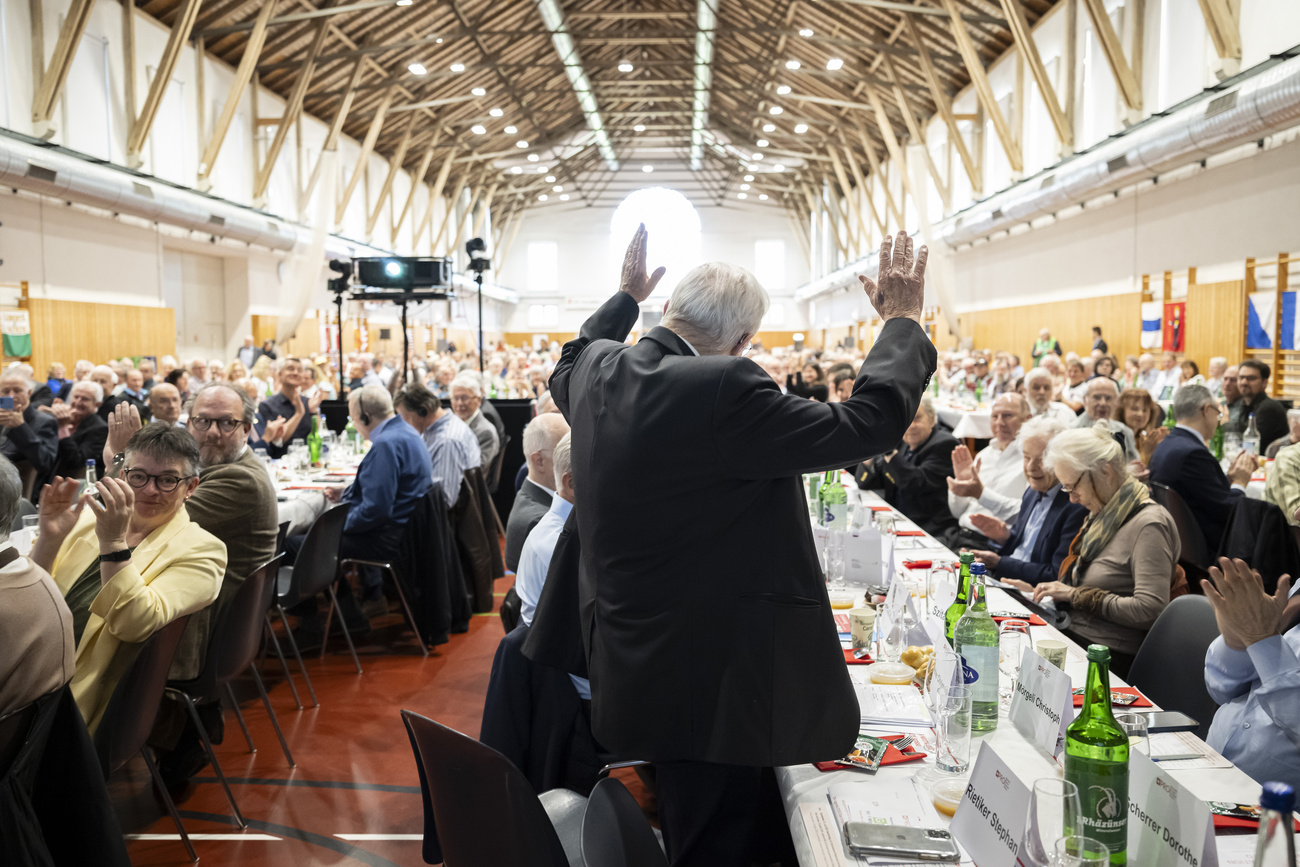
The neutrality initiative, however, calls into question the scope of this principle. The initiative, on which the Swiss people will vote on September 27, calls for a stricter definition of neutrality to be enshrined in the constitution.
>> To find out everything about the net neutrality initiative, read our explainer:
More
Should Swiss neutrality be stricter? Voters will decide
Liechtenstein: modelled on Switzerland
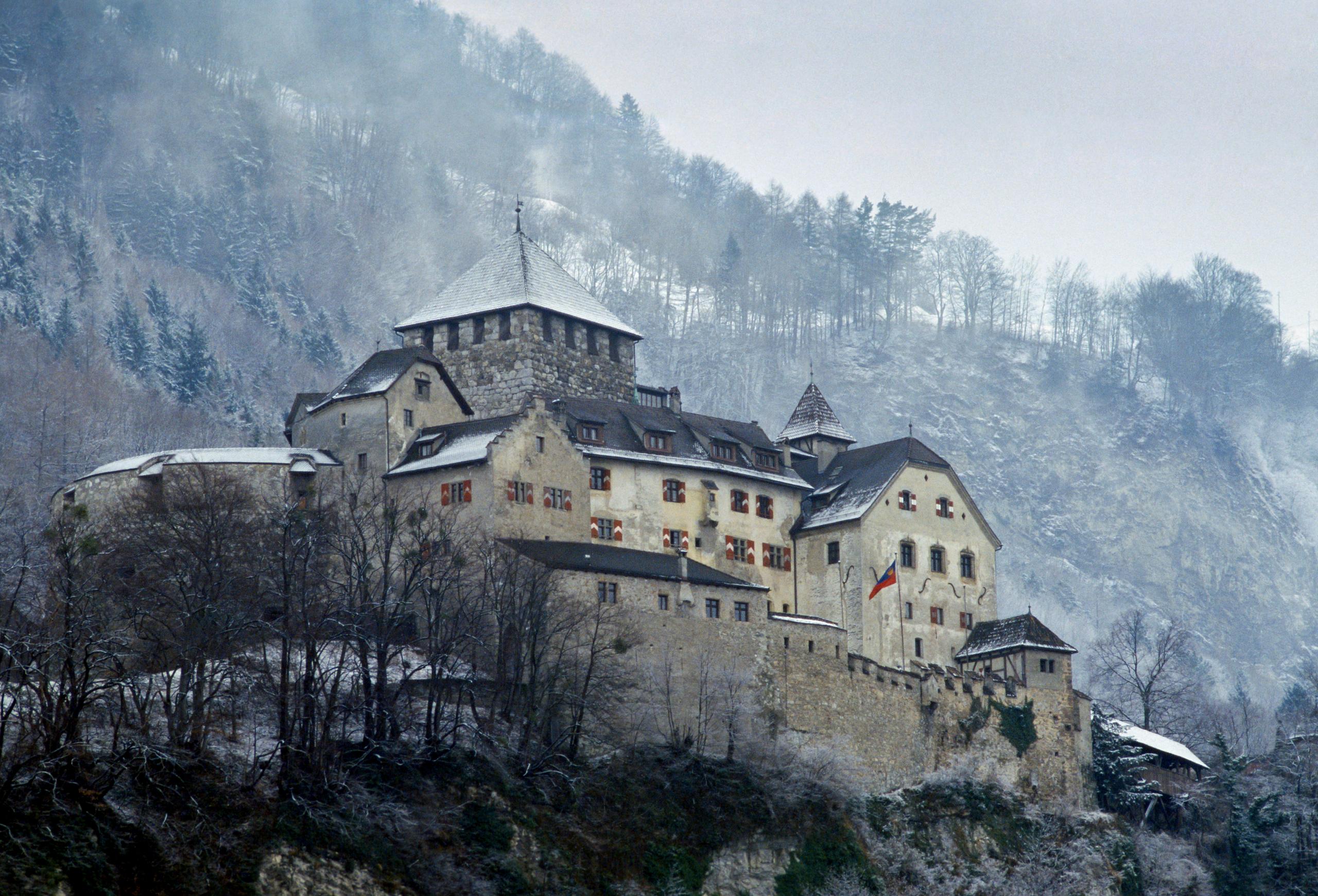
The Principality of Liechtenstein, linked to Switzerland by a customs and monetary union, has also been neutral since the abolition of its army in 1868. It relies on its close cooperation with Switzerland to guarantee its security and preserve its sovereignty.
>> Read our article on Liechtenstein’s 300th anniversary:
More
Good neighbours: Liechtenstein turns 300
Austria: the model most similar to Switzerland
Austrian neutrality is the closest to that of Switzerland.
Alongside Switzerland, Austria is the only European state to enjoy a status of permanent neutrality recognised under international law. The country also maintains an army tasked with defending its territory and its neutrality.
Its status as a neutral state is, however, more recent. Adopted in 1955 against the backdrop of the Cold War, Austrian neutrality was one of the conditions set by the Soviet Union to end the occupation of the country and restore its full sovereignty.
The main difference between Swiss neutrality and that of Austria lies in the fact that the latter has been a member of the EU since 1995. To reconcile neutrality with EU membership, Vienna can resort to the procedure known as “constructive abstention”. This allows a member state to opt out of certain decisions taken within the framework of the Common Foreign and Security Policy. Austria has, in particular, made use of this procedure regarding arms deliveries to Ukraine.
As in Switzerland, the Russian threat has also reignited the debate on neutrality in Austria. Some are now calling for NATO membership, while others believe that neutrality is precisely what guarantees peace.
Ireland: political rather than legal neutrality
Ireland is a different case. Unlike Switzerland or Austria, it does not have a status of permanent neutrality that is formally recognised or guaranteed by public international law.
Its neutrality is based primarily on a political tradition and on the desire to assert the national sovereignty gradually acquired following independence from the United Kingdom. This stance was particularly evident in the country’s decision not to take sides during the Second World War.
Ireland has never joined NATO. However, the country has participated in United Nations peacekeeping operations since the 1950s. For several decades, US military aircraft have also used Shannon Airport as a refuelling stopover on their way to conflict zones. This contrasts with Swiss practice, which has notably banned US aircraftExternal link involved in the war in Iran from flying over its territory.
The other major difference with Switzerland lies in the fact that Ireland devotes relatively few resources to its defence. However, in response to the Russian navy’s increasing activities in the North Atlantic, the country adopted its first national maritime security strategy this year.
>> Read our article on the evolution of neutrality in Switzerland and Ireland:

More
Staying in neutral? How Swiss and Irish debates compare
Malta: the most ambiguous case
Maltese neutrality is far more flexible than that of Switzerland. Closely linked to the country’s colonial history, it stems from a desire to preserve its sovereignty.
Having gained independence from the United Kingdom only in 1964, the archipelago first joined the Non-Aligned MovementExternal link in 1973, which brought together states refusing to align themselves with either the American or Soviet blocs during the Cold War.
Neutrality was then enshrined in the constitution in 1987. It prohibits membership of any military alliance, bans foreign military bases and restricts the use of Maltese territory for military purposes. Its relatively flexible wording has allowed successive governments to interpret it pragmatically.
After alternating between closer ties with the Eastern Bloc and opening up to Western Europe, Malta joined the European Union in 2004. However, a declaration annexed to the Accession Treaty specifies that its participation in the EU’s Common Foreign and Security Policy does not call its neutrality into question.
This coexistence of constitutional neutrality and alignment with many of Brussels’ positions regularly fuels debate. Observers now describe the archipelago as militarily neutral but politically alignedExternal link.
Unlike Switzerland, Malta has modest armed forces and devotes few resources to its defence. This situation fuels a recurring debate: some believeExternal link that a neutral state must be able to defend itself in order for its neutrality to be credible.

The Vatican and San Marino: neutrality through mediation and discretion
The Vatican and San Marino, two microstates landlocked on the Italian peninsula, both claim a form of neutrality, but for very different reasons.
The Holy See’s neutrality is formalised by the Lateran Pacts of 1929. It enables the pope to fulfil his mission, namely to stand above conflicts between states so as to be able to act as a mediator and a moral authority.
The case of San Marino is probably the least well known. The small republic has long cultivated a tradition of neutrality and non-alignment. This is based primarily on its small size, its geographical location – entirely surrounded by Italy – and a culture of diplomatic prudence.
Moldova: a fragile neutrality
Moldova’s neutrality was enshrined in the 1994 Constitution and explicitly prohibits any foreign military presence on its territory. However, Russian troops are permanently stationed in the breakaway region of Transnistria. The Russian invasion of Ukraine has also led Moldova to question its neutral status. The prospect of closer ties with the European Union and NATO is sparking increasingly heated debate.

Turkmenistan: neutrality recognised by the UN
Turkmenistan is the only country in the world whose permanent neutrality was explicitly recognised by the United Nations General Assembly in 1995. This status, adopted after the country gained independence following the collapse of the USSR, entails, in particular, a refusal to join any military alliance. It has enabled the former Soviet republic to remain on the sidelines of major regional conflicts, but it is also used by the regime to justify one of the world’s most isolationist policies.
Costa Rica and its unarmed neutrality
Costa Rica is nicknamed the “Switzerland of Central America” not only because of its stability, but also because of its neutrality, which was proclaimed in 1983. Unlike Switzerland, however, Costa Rica practises unarmed neutrality and relies on the United States for protection in the event of a crisis.
More
What does the future hold for Swiss neutrality?
Edited by Pauline Turuban. Adapted from German by Patrick Huwyler/ts

In compliance with the JTI standards
More: SWI swissinfo.ch certified by the Journalism Trust Initiative

You can find an overview of ongoing debates with our journalists here . Please join us!
If you want to start a conversation about a topic raised in this article or want to report factual errors, email us at english@swissinfo.ch.