








How water is driving a pushback against authoritarianism in Kyrgyzstan

Once regarded as Central Asia’s “island of democracy”, Kyrgyzstan has seen that reputation fade in recent years. Now, water is strengthening local communities and encouraging cross-border cooperation, with Switzerland playing an important role.
Select your language
Generated with artificial intelligence.

Listening:
How water is driving a pushback against authoritarianism in Kyrgyzstan

For years, the White House in the Kyrgyz capital Bishkek was both a symbol of power and a flashpoint for revolt. Built in the mid-1980s as the imposing headquarters of the Kyrgyz Communist Party, it became a focal point of the power struggles and revolutions that followed independence. Protesters stormed it three times, during the upheavals of 2005, 2010 and 2020. Today it houses the national parliament. “When I was a child, there were always barricades here and police in full riot gear,” recalls 28-year-old Kanatbek, as he walks through the parliament’s manicured park with friends on an early-summer evening.

Kanatbek, an economist, asks that his surname not be published to protect his family. He is critical of the direction his country has taken. “We have lost many of the freedoms we fought so hard to win,” he says. “It is very sad.”
Tough times for civil society
The area around Kyrgyzstan’s White House is much quieter today. President Sadyr Japarov has moved his office into a new building. Since snap elections in November 2025, parliament has been made up almost exclusively of politicians loyal to him. Japarov has now been in power for six years.
Meanwhile, the mountainous country of just over 7.5 million people, long regarded as Central Asia’s “island of democracy”, has fallen sharply in international democracy rankings.
External Content
“Power has been centralised, media freedom restricted, and suppression of civil society has increased,” says Joldosh Osmonov, director of GFA, a Bishkek-based consulting firmExternal link that supports civil society participation projects in Kyrgyzstan.
With the presidential election scheduled for January 2027, all eyes are on whether Kyrgyzstan will continue on this trajectory or whether fresh momentum could bring a shift. Meanwhile, civil society groups are trying to regroup. “Just over 100 of what were once almost 10,000 non-governmental organisations have survived the past few years,” says Osmonov, who supports ten of them with official backing from Switzerland. More than CHF5 million ($6.2 million) has been allocated for this work over the next four years.

Among these NGOs is the Development Policy Institute (DPI)External link in Bishkek, which works on local self-government in Kyrgyzstan. “Under the current government, we talk less about democracy and more about local development and Kyrgyz traditions,” says Sabina Gradwal, a DPI board member. These traditions include a form of community solidarity rooted in the country’s nomadic heritage, called ashar, and people’s assemblies, called kurultai. For Gradwal, water is also central to development.
Central Asia’s water tower
Kyrgyzstan, with nearly 1,000 glaciers and mountain ranges rising to 7,500 metres, is often described as Central Asia’s water tower. During the Soviet era, its water resources were exploited with little regard for the social or environmental consequences. The dried-up Aral Sea in neighbouring Kazakhstan and Uzbekistan and fed by rivers in Kyrgyzstan, is now regarded as one of the world’s worst human-made environmental disasters. Starting in the 1960s, Moscow diverted vast amounts of water to irrigate monoculture crops.
After 1991, as new national borders were drawn, disputes over water use repeatedly triggered armed clashes between countries in the region. “Today we know that without local responsibility and cooperation across national borders there can be no sustainable solutions for water,” says Melchior Lengsfeld, executive director of the Swiss development organisation Helvetas, speaking to Swissinfo at the organisation’s office in Bishkek.

Helvetas has worked for decades with the Swiss Agency for Development and Cooperation (SDC) to support local “water communities” in Kyrgyzstan. “They include municipalities, private committees, user organisations and women’s organisations,” says Lengsfeld. “The approach is not about confrontation, but about dialogue and cooperation. Water projects have become quiet laboratories for democracy.”

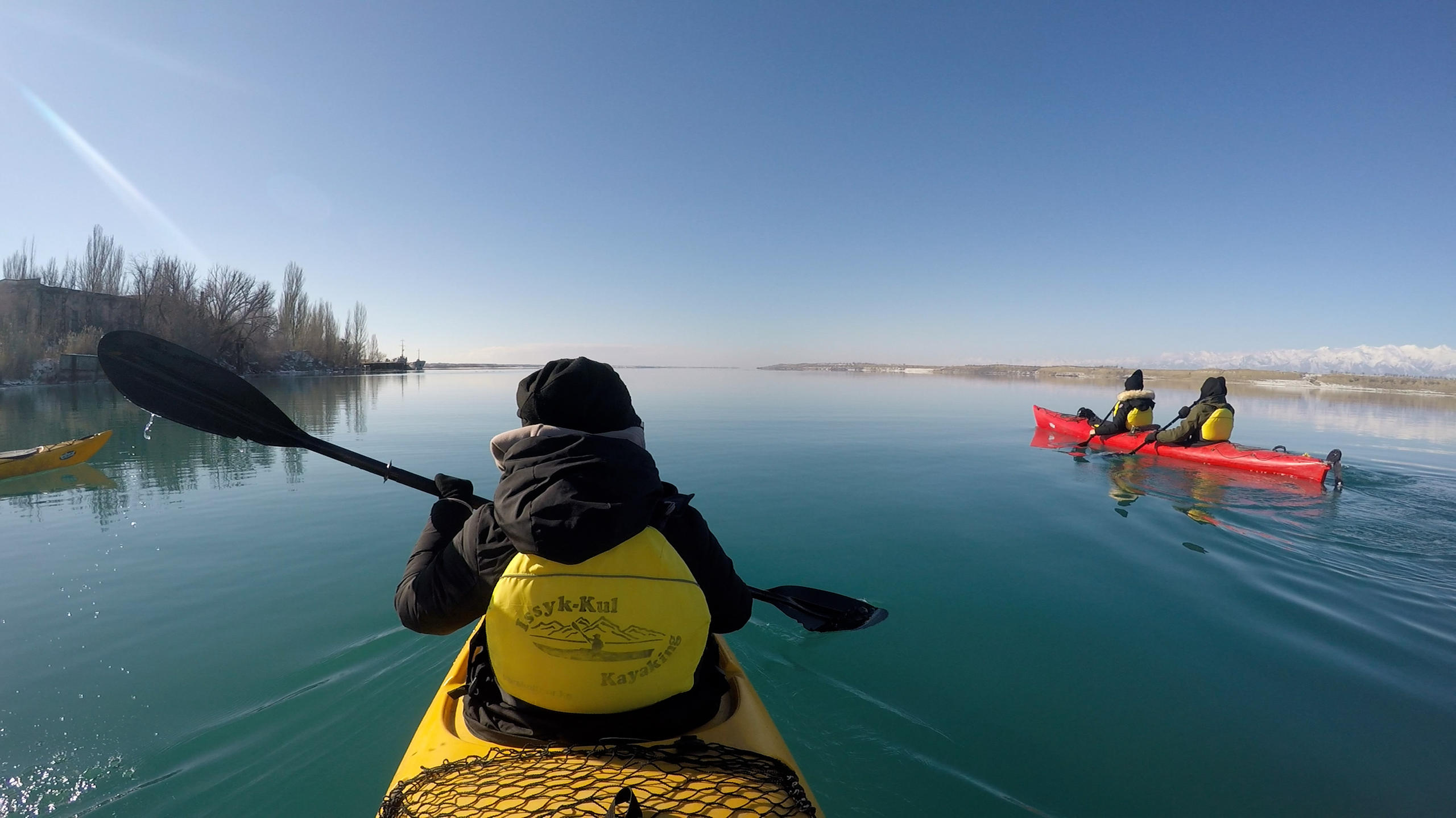
In eastern Kyrgyzstan, near the Chinese border, the impact is distinctly apparent. The mountain lake Issyk-Kul covers more than 6,000 square kilometres, lies 1,600 metres above sea level and is fed by at least 118 tributaries. It reaches a depth of around 700 metres and has no outflow. During the Soviet era, large parts of Issyk-Kul were a restricted military zone. Around the lake, farmers used glacial water to irrigate their fields, while people drank the water unfiltered. “Water was free and the infrastructure was crumbling,” recalls Olga Zavialova, who heads Karakol’s water supply modernisation programme on Issyk-Kul’s eastern shore. She has worked for the water authority in Kyrgyzstan’s fourth-largest city since 1986.

With a loan from the European Bank for Reconstruction and Development (EBRD) and Swiss funding through the State Secretariat for Economic Affairs (SECO) covering 70% of the costs, Zavialova’s programme has built new water reservoirs, pipelines, modern pumps and treatment facilities. “But the key issue is how individuals and the community use water,” says Zavialova. To support this, the city is currently equipping every household with digitally readable water meters and local citizens’ assemblies have been created to set fees for water use.
More
Why the Swiss are boosting winter tourism in Kyrgyzstan
Around Lake Issyk-Kul, other communities are following Karakol’s example by building modern, locally managed water supply systems. In Barskoon, a municipality of 9,000 people southwest of Karakol, the first reservoir is now under construction (main image). Kadyr Usenov, head of the local water authority there, shows that in many places, households still rely on basic wells for drinking water. On the other side of the lake in Korumdu, a village of 3,000, the new water system is already up and running. Hepatitis A, once common among children in the village, has largely disappeared thanks to the improved water supply. Timur Tuyleev is president of the association that manages the Swiss-backed supply system. “The water issue has brought us together into a strong community,” he says.

Last year, Kyrgyzstan’s local water authorities managed to resist some of the government’s drive towards centralisation in Bishkek by joined forces in a national association. With support from organisations such as DPI, the Local Governance Academy, a “Kyrgyz academy of local self-government” was founded. Project manager Sabina Gradwal says the model is now being expanded to neighbouring countries. Water is strengthening local democracy in this strategically important region. It is also encouraging greater cooperation among Central Asia’s heads of state, whose authoritarian style of rule is increasingly reaching its limits over the management of this vital resource.
Edited by Mark Livingston. Adapted from German by David Kelso Kaufher/ds

More
Our newsletter on geopolitics


See more Swissinfo articles in your Google results. Learn more

In compliance with the JTI standards
More: SWI swissinfo.ch certified by the Journalism Trust Initiative

You can find an overview of ongoing debates with our journalists here . Please join us!
If you want to start a conversation about a topic raised in this article or want to report factual errors, email us at english@swissinfo.ch.