








Swiss government rejects stricter definition of neutrality
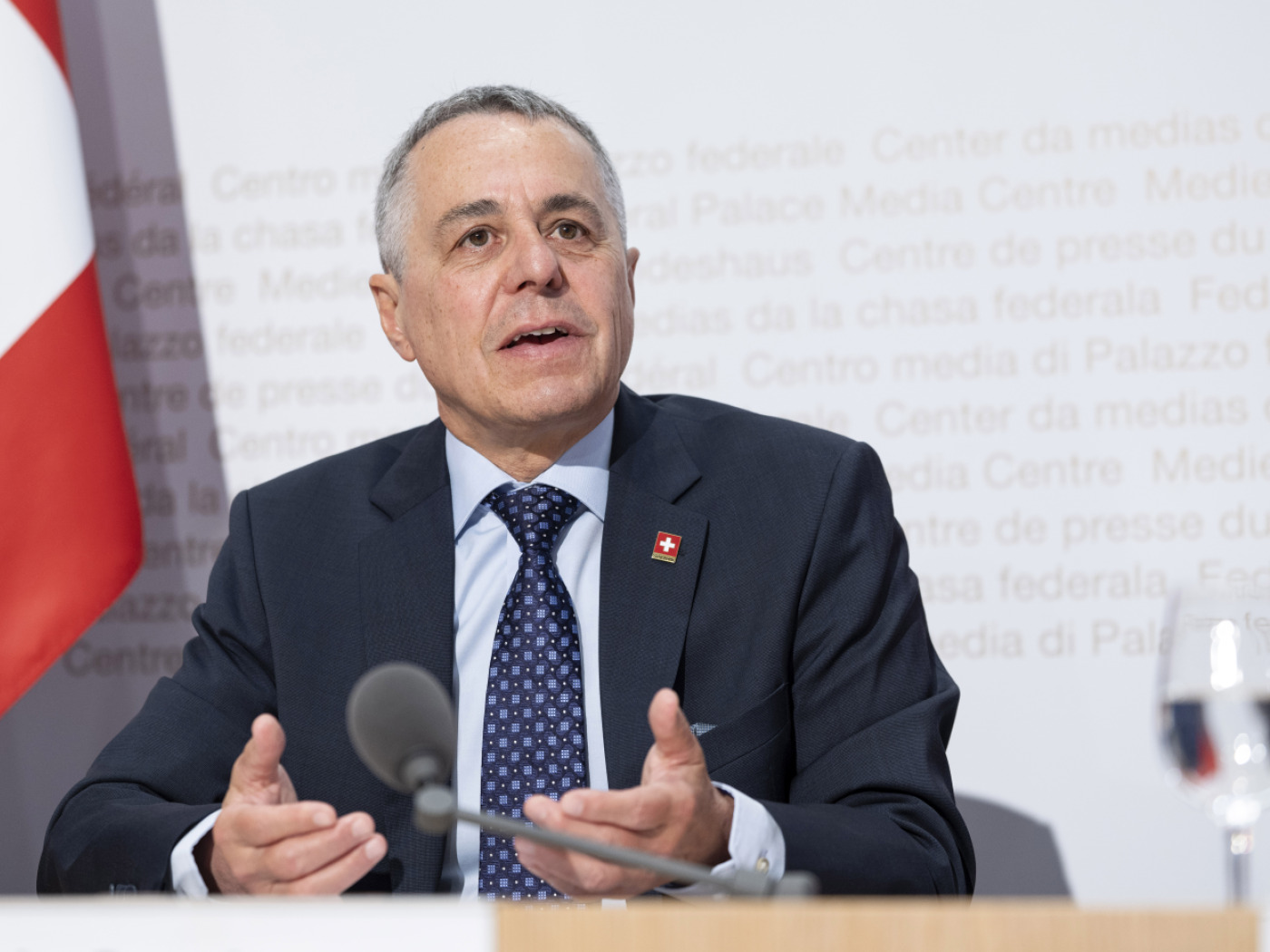
The Swiss government believes that current practice has proved its worth when it comes to neutrality. A stricter definition would reduce Switzerland’s room for manoeuvre, it says. The government therefore rejects the initiative on neutrality, which is to be put to a nationwide vote on September 27.
Select your language
Generated with artificial intelligence.
Listening:
Swiss government rejects stricter definition of neutrality
The popular initiative, tabled by Pro Suisse and members of the right-wing Swiss People’s Party, seeks to define Swiss neutrality as “perpetual and armed”. It also requires that Switzerland not join any military or defence alliances, not take part in foreign wars, and not impose economic or diplomatic sanctions against a belligerent state, subject to its obligations towards the United Nations.
Opposed to the text, the government launched its campaign on Tuesday. Some of the demands already correspond to current practice, it explained in the information leaflet ahead of the vote. And where it goes further – in the areas of security and sanctions – the initiative harms the country’s interests, the government said.

More
How the neutrality initiative could affect Swiss policy
Bern uses its neutrality in a targeted manner to defend its interests, the government pointed out. Current practice provides the necessary room for manoeuvre to this end.
Furthermore, as a small state, Switzerland needs to cooperate with its partners on defence matters, it said. It also has much to gain from the order established by international law. The government considers sanctions to be an important tool for responding to violations of that law.
More
What does the future hold for Swiss neutrality?
+ How we produce English news
Translated from French, reviewed by an English Department journalist.

In compliance with the JTI standards
More: SWI swissinfo.ch certified by the Journalism Trust Initiative

You can find an overview of ongoing debates with our journalists here . Please join us!
If you want to start a conversation about a topic raised in this article or want to report factual errors, email us at english@swissinfo.ch.