








Why Switzerland depends heavily on fossil fuels

Series Switzerland and fossil fuels, Episode 14:
The energy crisis triggered by the conflict in the Middle East has highlighted the extent to which Switzerland continues to rely on oil and natural gas. Here are answers to key questions concerning Swiss dependence on fossil fuels.
Select your language
Generated with artificial intelligence.
Listening:
Why Switzerland depends heavily on fossil fuels

The conflict in the Middle East created “the largest supply disruption in the history of the global oil market”, accordingExternal link to the International Energy Agency. About 20% of the world’s crude oil trade passes through the Strait of Hormuz in the Persian Gulf. Its blockade has had global repercussions: higher energy prices, slower economic growth and renewed geopolitical tensions.
The war in Iran clearly shows that dependence on fossil fuels is harmful because centralised energy systems are vulnerable, arguesExternal link a group of Swiss NGOs working on climate and environmental protection, including the Swiss Energy Foundation (SES). At the end of April, they called on the federal authorities to rapidly abandon oil and natural gas.
Switzerland, while widely regarded as a model country for low‑carbon electricity production, remains heavily reliant on fossil fuels. Each year, the country spends billions of francs importing oil and gas from abroad. Without these hydrocarbons, Switzerland could not function as it does.
>> Discover our series on fossil fuels in Switzerland:

More
Switzerland’s fossil fuel dependence explained
How much of Switzerland’s energy comes from fossil fuels?
Switzerland produces almost all of its electricity from renewable sources – hydropower, solar and wind – as well as from nuclear power plants. Fossil fuels, whose combustion releases greenhouse gases into the atmosphere and contributes heavily to the climate crisis, play only a marginal role in electricity generated in Switzerland (2.3% in 2025External link). This is one of the lowest shares in Europe and worldwide, as the following map illustrates:
External Content
However, when the total amount of energy used in the country is taken into account, the picture looks very different. In Switzerland, 58%External link of final energy consumption comes from fossil sources (2024 data). These include petroleum products such as petrol, heating oil and aviation fuel (45.7%), as well as natural gas (12.3%).
“Switzerland has a relatively low‑fossil‑fuel electricity system, but its final energy consumption remains heavily dependent on imported hydrocarbons,” says Stéphane Genoud, professor of energy management at the University of Applied Sciences and Arts of Western Switzerland (HES‑SO).
Products derived from crude oil are essential for transport, heating and industrial processes. Gas is used mainly for cooking and heating homes.
More than nine out of ten cars on Swiss roads are powered by petrol or diesel internal combustion enginesExternal link. Fossil fuels also dominate the building stockExternal link: six out of ten residential buildings are heated with fossil fuel-powered boilers.
External Content
In international comparison, Switzerland is less dependent on fossil fuels than the average among industrialised countries, where oil, gas and coal account for between 65% and 85% of final energy consumption. However, with a share just below 60%, Switzerland still lags behind the most advanced models of decarbonisation, such as the Nordic countries.
Where do the fossil fuels consumed in Switzerland come from?
Switzerland imports all the fossil fuels it consumes. In 2025 it purchased crude oil mainly from the United States – which, following the blockade of the Strait of Hormuz, became the world’s leading exporter – and from Nigeria.
Switzerland also imports petrol, diesel and other refined petroleum products, predominantly from countries of the European Union, which in turn source their supplies from the United States, Norway and Saudi Arabia.
Natural gas also reaches Switzerland via the EU. In 2025 Europe imported three-quarters of its gas (in gaseous state) from Norway and Algeria. Liquefied natural gas (LNG) came largely from the United States.
>> Watch the short video for an overview of Switzerland’s fossil fuel supplies:
How reliable is the mix of countries supplying fossil fuels to Switzerland?
Switzerland’s energy security is currently “above average”, and the long-term supply of oil and gas is “granted” under present conditions, Khaldoun Dia-Eddine, a geopolitical and economic analyst at the Zurich University of Applied Sciences (ZHAW), told Swissinfo.
When it comes to oil, Switzerland is in good shape, according to Dia-Eddine. Suppliers are geographically diverse and reliable, and their installations are not directly affected by ongoing geopolitical conflicts.
The situation is more delicate for natural gas. Switzerland does not have large storage facilities and relies on imports routed through neighbouring countries. This does not pose an immediate risk of shortages, but it does create a political dependence that could become relevant in extreme scenarios, Dia-Eddine says.
More
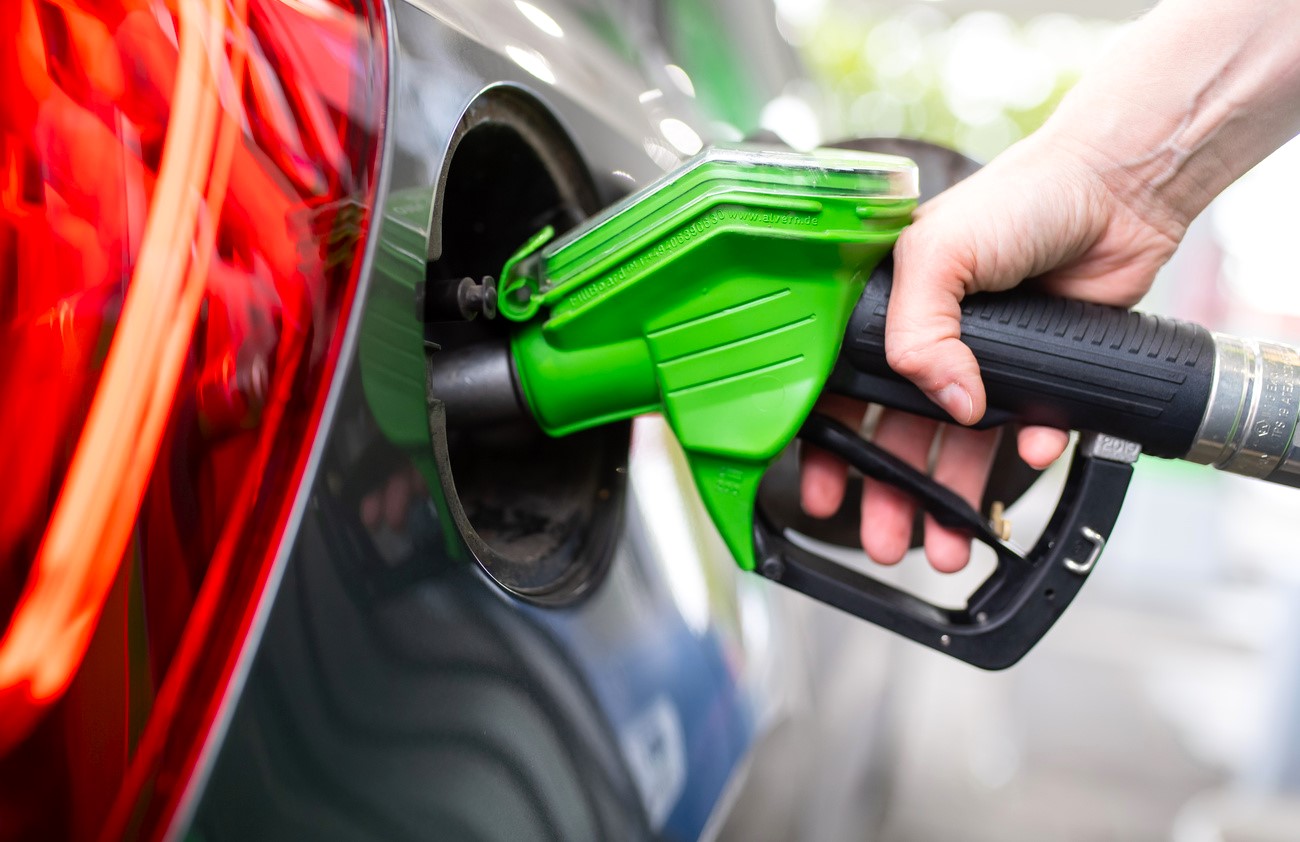
US oil buoys Swiss fossil fuel needs amid Middle East conflict
Stéphane Genoud considers Switzerland’s current dependence on the US to be “problematic”. Switzerland, he explains, is exposed to a highly volatile global market, with prices increasingly influenced by the cost of LNG – which mainly comes from the United States – and by competition with Asia.
Switzerland has no LNG terminals of its own and relies on the re-gasification and transport capacity of neighbouring countries. “This puts it in a subordinate position in the event of tensions or national priorities,” he says.
Genoud adds that shocks to US supply – caused by political decisions or extreme weather events – are rapidly transmitted to the European market. This is compounded by structurally higher costs and a larger climate footprint of American LNG compared with gas transported by pipeline.
How much does Switzerland spend on fossil fuels?
Between 2015 and 2024, Switzerland spent between CHF5.17 billion ($6.57 billion) (in 2016) and CHF11.16 billion (in 2022) per year importing fossil and nuclear energy, says the Swiss Energy Foundation, based on federal government statistics. The record bill in 2022 was due to the war in Ukraine and the resulting surge in natural gas prices.
In 2024 Switzerland paid CHF6.17 billion for oil and refined petroleum products, CHF1.94 billion for gas, CHF119 million for nuclear fuel and CHF16 million for coal.
The disruption of fossil fuel transport in the Persian Gulf will have an impact on the cost of energy supplies to Switzerland. According to an estimate by Cyril Brunner, researcher at federal technology institute ETH Zurich, the increase could amount to almost CHF5 billion a year.
Why will Switzerland fail to meet its net‑zero emissions target?
Switzerland, like many other countries, aims to reach net-zero emissions by 2050. The intermediate target calls for a 50% reduction in emissions by 2030 compared with 1990 levels. However, as acknowledgedExternal link even by senior Swiss officials, achieving this goal will be impossible.
Stéphane Genoud identifies two main factors that are slowing the transition. The first is that, in the past, oil prices were too low for increases to have a significant impact on Swiss household finances. “It’s often said that a barrel below $100 [CHF79] is too cheap to trigger a real change in energy behaviour,” he says.
The second is that the energy density of oil (the amount of energy contained per unit of mass or volume) is so high that it is difficult to find credible alternatives for some uses of fossil fuels, such as truck fuel. “For this reason, facilitating the energy transition requires high prices and/or financial support,” Genoud argues.
External Content
He also stresses that supporting the transition to renewable energy sources not only reduces dependence on fossil fuels, it also improves Switzerland’s trade balance. “Fossil products all come from abroad, whereas renewable energy is domestically produced. We therefore need to rapidly increase our electricity production.”
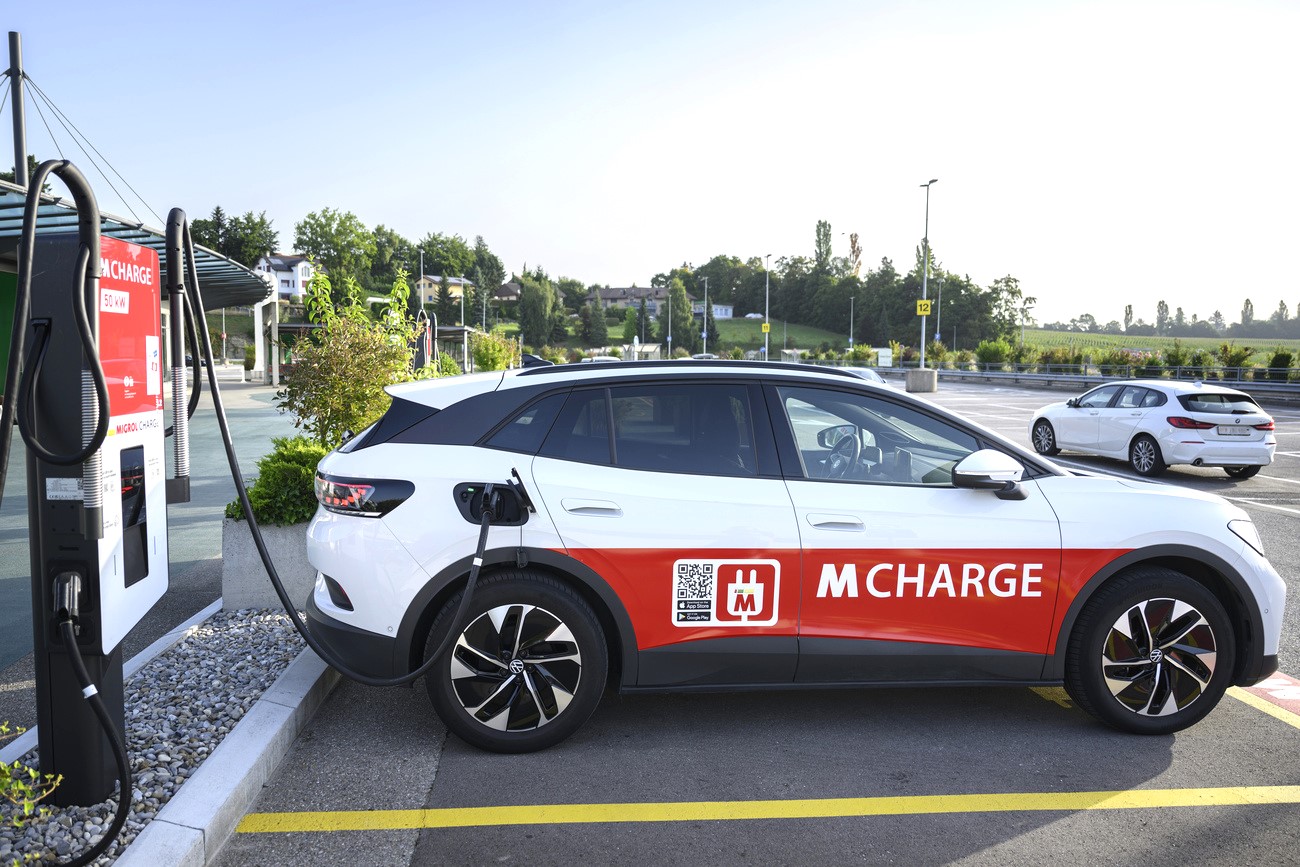
Anthony Patt, professor of climate policy at ETH Zurich, blames the current government for the lack of momentum in this direction. “It hasn’t prioritised the shift to electric mobility and has failed to address the main barrier to buying a battery‑powered vehicle: namely the lack of charging infrastructure where people live,” he told Swissinfo.
A similar situation applies to heating systems, according to Patt. In this area, Switzerland has achieved relatively good results, particularly thanks to the Buildings Programme, which facilitates investments in heat pumps by property owners, he says. “However, the government has been trying to cut back funding – a choice that risks slowing progress.”
Will the conflict in the Middle East affect Switzerland’s dependence on fossil fuels?
Fossil fuel supplies to Switzerland remain uninterrupted because the country’s energy supply does not depend directly on the Persian Gulf region. However, due to rising prices on global markets, petrol and heating oil have also become more expensive in Switzerland.
Marcel Hänggi, an energy and climate expert at the SES, hopes that the current situation will raise awareness of the need to move away from fossil fuels. One initial positive sign, he says, is that “Switzerland has not given in to the temptation to adopt measures that would further reinforce this dependence”, referring to the fuel tax cutsExternal link introduced by Italy, Germany and other European countries.
Stéphane Genoud notes a growing awareness of the urgency of a rapid energy transition. “Switzerland’s dependence on fossil fuels should therefore decline in the medium term,” he predicts.
In response to the spike in oil and gas prices linked to the war in the Middle East, several European countries have announced measures to reduce their reliance on fossil fuels. At the end of April, France became the first industrialised country to present a national roadmap for phasing out oil and other fossil fuelsExternal link. The United Kingdom aims to accelerate the deployment of renewable energy and plans to roll it out on a large scale on public land.
In Switzerland, the Green Party is calling for a national roadmap for a rapid and systematic exit from fossil fuels. “There are great opportunities for Switzerland to reduce and ultimately eliminate its reliance on fossil fuels,” says Anthony Patt. “But for this to happen, adequate political support is essential.”
Edited by Veronica De Vore/ts


See more Swissinfo articles in your Google results. Learn more

In compliance with the JTI standards
More: SWI swissinfo.ch certified by the Journalism Trust Initiative

You can find an overview of ongoing debates with our journalists here . Please join us!
If you want to start a conversation about a topic raised in this article or want to report factual errors, email us at english@swissinfo.ch.