








Eleven years after landmark nuclear deal, US and Iran are ‘back to square one’

US and Iranian diplomats are meeting in Switzerland on Friday to open a new chapter in negotiations over Iran’s nuclear programme – talks that could ultimately lead to a deal resembling the one abandoned by Donald Trump in 2018.
Select your language
Generated with artificial intelligence.
Listening:
Eleven years after landmark nuclear deal, US and Iran are ‘back to square one’

Representatives from the United States and Iran are convening at Bürgenstock, in canton Nidwalden, for initial discussions on implementing a peace memorandum of understanding signed on Wednesday evening. Mediators from Pakistan and Qatar will assist the talks, though the composition of the delegations has not been disclosed.
The MOU, the result of several weeks of negotiations and published immediately after its signing, outlines the broad principles of a final agreement. The finer details are to be negotiated over the next 60 days.
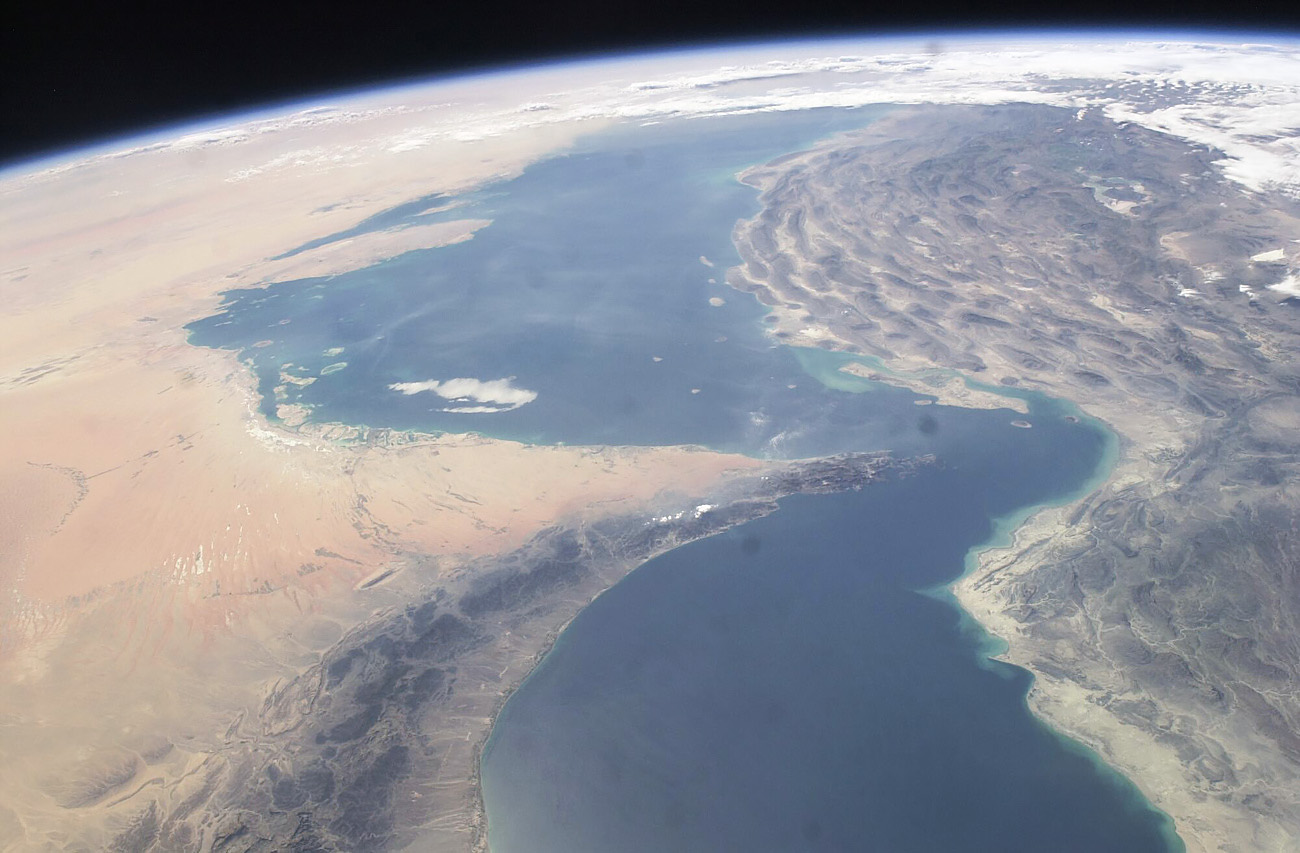
Key provisions include the reopening of the Strait of Hormuz – the closure of which has disrupted the global economy – and a halt to military operations on all fronts, including in Lebanon, the scene of fighting between Israel and Hezbollah. The document also addresses the lifting of US sanctions and the future of Iran’s nuclear programme.
>> Read our analysis about the blockade of the Strait of Hormuz:
More
Iran-US: the stakes of disruption at Hormuz for Switzerland
Back to square one
Friday’s meeting marks the beginning of a new phase in negotiations, particularly on the highly contentious issue of Iran’s nuclear activities, the outcome of which remains uncertain. No immediate breakthroughs are expected.
“It’s back to square one,” says Marc Finaud, a research fellow at the Geneva Centre for Security Policy (GCSP).
Donald Trump has described the memorandum as “a bulwark against any possibility of Iran ever acquiring a nuclear weapon,” claiming it is “the opposite” of the 2015 Vienna agreement from which he withdrew in 2018. In his view, the deal negotiated under Barack Obama was too “weak” and overly favourable to Tehran.
“The 2015 agreement was highly detailed, based on mutual trust, and included systems of verification, inspections and strong involvement from the international community, the UN Security Council and the International Atomic Energy Agency (IAEA),” notes Finaud, an expert on nuclear disarmament.
The Vienna Agreement, formally known as the Joint Comprehensive Plan of Action (JCPOA), was concluded by Iran, the United States, China, France, the United Kingdom, Russia, and Germany. It placed strict limits on Iran’s nuclear programme in exchange for the lifting of international sanctions and introduced enhanced controls on the country’s nuclear facilities. However, several key provisions were designed to expire over time.
60 days to negotiate
The 60-day deadline, which the parties may extend by mutual agreement, appears particularly ambitious, given that the Vienna Agreement was the culmination of more than ten years of diplomatic efforts.
“This timeline is realistic only if expectations remain modest and the goal is to return to something broadly resembling the JCPOA,” Finaud explains. “But if the aim is to go further, for instance, by including ballistic missile capabilities, then it is not feasible.”
The issue of ballistic missiles was on the agenda of earlier rounds of talks mediated by Oman in Geneva this year, which ultimately ended in failure. Notably, the current memorandum makes no reference to it.
As it stands, the text signed on Wednesday simply reaffirms Iran’s commitment not to acquire nuclear weapons and addresses the dilution of its enriched uranium stockpiles. It also notes that “both parties have agreed to discuss the issue of enrichment.”
>>Read this article to learn more about why the previous negotiations failed:

More
War in Iran: were the negotiations held in Geneva doomed to fail?
Back to Switzerland?
It remains unclear whether further rounds of negotiations over the coming 60 days will continue in Switzerland. The country has a long history of hosting such talks, dating back to the first discussions on Iran’s nuclear programme in 2003, as well as the talks between 2013 and 2015 in Geneva and Lausanne.
“Geneva is convenient for everyone because of its infrastructure and because there is a precedent,” says Marc Finaud. “But it remains to be seen whether the Pakistani and Qatari mediators will be willing to host these negotiations on their own territory.”
Speaking on Swiss public radio RTS on Monday, Hasni Abidi, a lecturer at the University of Geneva’s Graduate Institute and director of the Centre for Arab and Mediterranean Studies, expressed hope that Switzerland, which has so far been largely absent from the negotiations, could “move beyond its role as facilitator to play a part in consolidating the agreement.”
When contacted, the Swiss foreign ministry said that Switzerland “is acting as a facilitator, creating the practical and diplomatic conditions necessary for this meeting to take place on its territory.”
Switzerland has represented US interests in Iran since 1980, giving it a unique and longstanding intermediary role between the two countries.
Join the debate:
External Content
Edited by Virginie Mangin/sj/Adapted from French with AI/sb
More
International Geneva

In compliance with the JTI standards
More: SWI swissinfo.ch certified by the Journalism Trust Initiative

You can find an overview of ongoing debates with our journalists here . Please join us!
If you want to start a conversation about a topic raised in this article or want to report factual errors, email us at english@swissinfo.ch.